

World-building is a balancing act between alien complexity and Earth’s familiarity. If authors make characters and settings too alien, they risk confusing readers and interrupting the reading experience. But the other side of the coin – applying Earth qualities, standards, and cultural norms to non-Earth planets and societies – isn’t any better.
We’re so used to Earth and the way we live and behave, our customs, values, and social rules that they become invisible to us. They become the “givens” of human life, and often, we attribute them to other non-Earth worlds and cultures. Our ways of life are rooted in thousands of years of history. Other planets have different historical trajectories that produce alternate ways of life that feel normal to the characters.
Here are seven things to look out for when world-building:
Your society doesn’t “function”
Did you ever read a book where none of the characters work, and yet they always have plenty of cash? Most societies have social structures and economies that keep the place running, that differentiate roles and assign values, establish levels of power and induce friction. If your story takes place on a spaceship, you should have worked out who makes and enforces the rules? What are the checks and balances to those in power? Who may not be happy with their lots in life, and what are the penalties for destabilizing the status quo? You might ask yourself where the crew gets its food and how they manage population growth. These details may not end up in the book but should be part of your world-building.
Missing the inciting event
A story takes place at a point in time, usually a time when the crap is hitting the fan and getting splattered all over the pages. The big question is “Why now?” Why not last year or next year?
The answer is pretty obvious if the inciting event is an alien invasion, but some conflicts build over generations. What happened to cause the action to explode now?
Creating one-dimensional ethnic/racial/alien/social/political/religious groups
Diversity exists in all life forms, especially in sentient ones. In any well-rounded character profile, there will be a diversity of skills, quirks, strengths, flaws, and world views. When designing groups that inhabit the world, unless they’re zombies, avoid making them all act, think, and believe exactly the same way. Create different factions, power structures, opinions, temperaments, skill sets, and interests within each group. This adds underlying tension to your story.
Characters don’t fit the world
Characters who are outcasts and misfits are fine, but characters are also reflections of the worlds they inhabit. To a degree, the way they think, act, and perceive their choices will be colored by the world they grew up in. For example, a character from a pacifistic society would likely feel uncomfortable with violence and wouldn’t be an instant pro with a weapon. A character who can talk to animals would probably not eat meat. A truly egalitarian world wouldn’t be run by men.
Earth-origin cultures haven’t evolved
This applies specifically to futuristic stories with Earthlings. Not only does technology evolve, but attitudes, values, and traditions evolve. Just look at all the changes over the past 300 years and how quickly change is occurring now. What will holidays and celebrations look like in the future? Will some have faded away while new ones are established? Will we still use money? How will gender roles, parenting styles, and family structure have changed? Look at trends, create a few new ones, and most of all, try not to recreate 2017 in 2317.
High tech and magic fail to cross systems
Unless technology or magical power is limited to a band of secretive recluses on top of a mountain, it’s going to have a pervasive effect on the world’s systems. It would ripple through the social structure, education, arts, power hierarchies and values, economies and politics. For example, consider the vast changes that teleporting would have on commerce, tourism, terrorism, security, food, love… You could live in China, work in Brazil, and dine out in Egypt.
A history of high tech or magic hasn’t impacted the present
If trees had the ability to talk, the world would look quite different. We probably wouldn’t use wood products, and we’d have tree friends. Cutting down a tree might be considered murder. Except for well-kept secrets, everything that exists in your imaginary world today has a history that shaped it. What if, in your world, technology had cured death a thousand years ago? Massive changes would have occurred across all the world’s systems. So, what would a normal day look like today?
These seven mistakes are easy to avoid with a little contemplation, and you needn’t include all the backstory and details in your book. Just by going through the exercise you will add to the complexity and, thereby, increase the reality of your world.
Happy World-building!
Diana

Diana Wallace Peach
Website/Blog – Facebook – Twitter – Goodreads
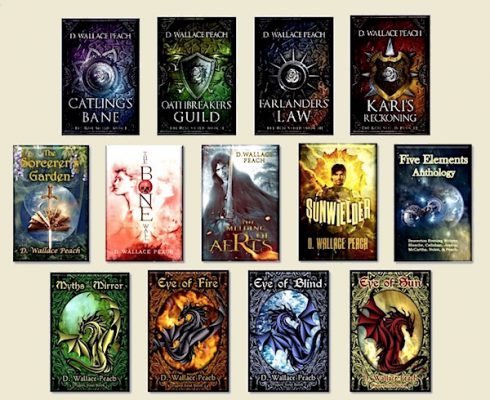
Amazon:
USA – UK – CA – AUS – IN
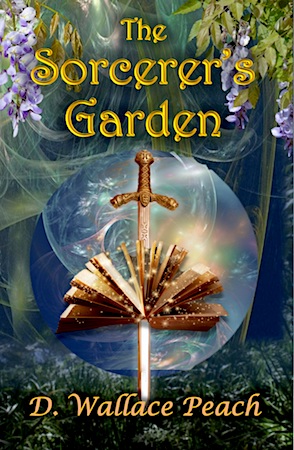
Featured Book: Sorcerer’s Garden
 Chris The Story Reading Ape's Blog
Reading your tips, I see why your worlds work so well, in your novels. this is a helpful summation of how-to world build.
LikeLiked by 2 people
Thanks, Jacqui. Happy World-building yourself as you tell Lucy’s story 🙂
LikeLiked by 1 person
“These details may not end up in the book but should be part of your world-building.”
Too many authors don’t really understand this — the utter importance of internal validity. When it’s not there, even if a reader can’t put to words exactly what’s wrong, they know. This is just one of the facets that sets your books apart for me, Diana: the ability to create a cohesive world, whether every facet makes it onto a page or not.
When I begin to think about internal validity (unless I purposely approached a passage for the sake of analyzing it), it’s because it’s been violated. I’m drawn out of the story, thinking, “That wouldn’t really happen” or “Where did that come from?” or “Yeah, but how did they get the __________?” In other words, if internal validity / cohesive world building are in place, I’m not aware of them.
Thanks for sharing so generously with others what you do so well.
And thanks for providing another outlet for Diana and others to share, Chris!
LikeLiked by 2 people
Thanks for the great comment, Erik, and the clear description and explanation of “internal validity.” I was thinking about that yesterday, or more so, that really good world-building almost becomes invisible because it doesn’t call attention to itself. The buy-in should be so complete that the reader just accepts it and reads on. The funny/ironic part of it is that the point of all that work is to have it not get noticed! 😀 🙂 Have a great Sunday, my friend.
LikeLiked by 2 people
You see…this just goes to show that much education happens outside of the classroom. Nice, D.
LikeLiked by 3 people
Thanks so much for stopping by to read, Van. I could chat about this stuff all day, obviously. I’m so glad you found it interesting. Have a great weekend, my friend. 🙂
LikeLiked by 3 people
This is very helpful information, for all writers. And it shows how when you read a book that really has it all together, how much thinking went on before the author started writing chapter one! Thanks for sharing these behind-the-scenes tips!
LikeLiked by 3 people
Thanks for the comment over here, too. There is a lot of behind the scenes planning. And thank goodness there are multiple drafts when writing since world-building continues to deepen as a story unfolds. It’s all plain old fun. 🙂
LikeLiked by 2 people
Gorgeous photo, Diana!! You are a genius, and admittedly, my brain can’t process the meaning of everything you write, but despite that, I am in utter awe. You are one hell of a writer and human being. I am so happy for you and all of your successes. So very deserved! Lots of love to you! xo
LikeLiked by 3 people
Thanks again, Tanya. What a wonderful and kind comment. I can’t take credit for the image, but isn’t it cool? Thanks for giving the article a go – clearly I’m a world-building geek. Ha ha. Lots of love to you too, my friend ❤
LikeLiked by 1 person
Helpful tips on world building, Diana.
LikeLiked by 3 people
Thanks, Mary. Happy Writing, my friend. 😀
LikeLiked by 2 people
I love this series. Yet another brilliant post. Thanks, Diana. And thanks for hosting, Chris. 🙂
LikeLiked by 3 people
Thanks, Sarah. I’m delighted to be over here, as always. Hope you have a fabulous day!
LikeLiked by 2 people
Another very helpful post, Diana. I have ordered Grumpy Anna and the grouchy monsters for my niece for Christmas. You can be sure I will sneak a peak before she gets it [smile].
LikeLiked by 3 people
Thanks, Robbie! What a sweet comment. I hope your niece enjoys it too. Thanks for popping over to read. ❤
LikeLiked by 2 people
Great tips Diana.
LikeLiked by 3 people
Thanks, Brad. I’m glad you enjoyed the read. Happy Writing, my friend. 🙂
LikeLiked by 2 people
My pleasure Diana.
LikeLiked by 1 person
Reblogged this on Myths of the Mirror and commented:
Just in case you didn’t get your fill of World-building, I’m over at The Story Reading Ape’s blog with another installment. Swing on by if you want to learn about what can go wrong! Happy November!
LikeLiked by 2 people