
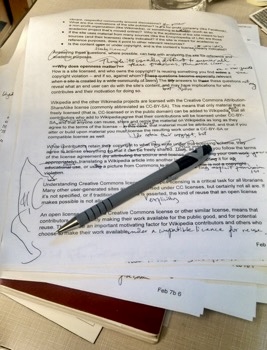
 One of the best pieces of advice to new writers is to get a good editor. One of the most common answers to this is, “But I can’t afford it!”
Granted, prices for editors can be substantial. Some more than others, whether it’s because of different types of editors or just individuality in pricing. There is no accepted common standard for what to charge for these services.
The thing is, if you don’t use an editor, the chances of putting out a substandard piece of work are very high. We miss our own typos, because the brain fills in what should be there. Content editing catches plot holes or continuity issues that we’re too close to our work to easily see for ourselves.
So what is the financially challenged writer supposed to do?
First of all, a writer should go through a self-editing phase before looking for an editor. Why? Because there’s a lot you can catch and you are likely to see places for improvement along the way.
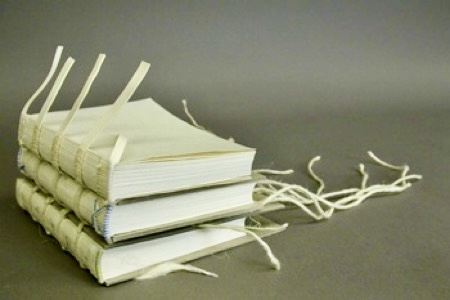 The best practice for this is to put it aside for a while, so that you can read it again with fresh eyes. I know, you’ve written your heart into this book and you can’t wait to see it out in the world, but rushing it will only lead to regrets when it bombs.
How long should you put it aside? Minimum is two weeks. If you feel like it might have pacing or other content problems, ideally give it six months. Chances are you’ll cave and pick it up before then, but at least give it good intentions.
If you really want to separate yourself from the manuscript so you can look at it objectively, start writing something else. Another novel, next in the series, even a short story for someone’s anthology will take you out of your fictional world and put you into a different one, so that when you return, you’ll have a fresher perspective.
Not only will you spot typos and possible improvements more easily, but you’ll develop a little objectivity about your story. The drawback here is that many of us can be very self-critical and you might decide your story is rubbish, deserved or not. This is where getting a different set of eyes on it will help.
Your best friend will tell you it’s wonderful, unless she’s like me and brutally honest. However, you can gauge her enthusiasm to get a clearer picture. Better yet, trade critiques with another writer. While we might be diplomatic, writers tend to tell you if something is off.
 Some of the best editing I’ve seen is when several writers exchange story editing while working on an anthology. The comments that have come back to me were nearly always improvements, similar to what I’ve had from professional editors. It’s important to take such criticism with appreciation, and not let ego get in your way. Even if you disagree with a suggestion, always thank the other writer for their comments.
Ideally, after you’ve done a self-edit and had someone else critique, this would be the time to pass the story to a professional editor. However, if it’s just not financially possible, at least you will have caught the majority of mistakes and improved the story to the best of your ability.
If you’re still not sure about the quality of your story, put it aside again and start fresh later. If you’re very sure your story is wonderful now, put it aside a bit longer, then read it with fresh eyes. Objectivity is not easy when reading our own work.
Getting four figure quotes for editing on a piece of work that may never recoup that amount can be frustrating. Shop around. Ask other writers for recommendations for people they’ve worked with. Run your story by beta readers, after giving it your best self edit. Many of those will point out the same things an editor would.
Whatever you do, don’t just release your first draft without any form of editing. The review comments can be soul destroying.
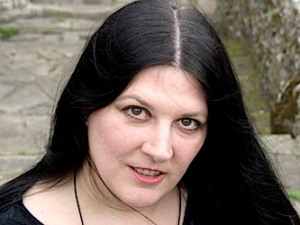
Jaq D Hawkins
Books available at:
Amazon:
 Chris The Story Reading Ape's Blog
Getting a really good developmental edit on an early work is a great way to jump-start the learning curve. Worth doing at least once, though I used a cheaper approach, in the form of a grad student training on that kind of work. I also do the read-aloud at the polish-the-prose stage.
Beta readers and critique partners (ones who don’t pussy-foot around your flaws) are essential, and doing some critiques in return will teach you a lot.
I also print out the whole thing at least once in the process (Hate the waste that involves, but it’s necessary). I should do my read-aloud from a different device, but I like to make the fixes as I go, so the large-format desktop it is.
LikeLiked by 2 people
Doing the critiques in return is very educational indeed!
It helps spotting habits like using ‘as’ too often as well as over explaining or describing things and other bits that slow down the narrative.
LikeLiked by 1 person
One of the harshest realities I’ve even encountered was the realization that, despite intense effort, I cannot trust my own proofreading. This article is spot-on. One other piece of advice I give authors is not to be in a huge hurry to get their newly-written book out. Besides releasing a more honed product, waiting gives you time to do some pre-release promotion.
LikeLiked by 2 people
Yes, pre-release promotion is an important factor.
What I find best about waiting and reading with fresh eyes, though, is I always find several places where I can improve a sentence, or expand an idea.
It’s hard to resist getting it out there quick, but oh so worthwhile!
LikeLiked by 1 person
I just noticed a typo in my comment, unintentionally proving my point!
LikeLiked by 2 people
The first book I ever published had the benefit of a damned good editor. Not only did she catch the things I’d missed, she also taught me a hell of a lot about /good/ writing when it comes to fiction. I will be forever grateful to that editor but…as a typical Indie author, I spent way more on that book than I ever got back. Waaaaay more.
Since then, this: ‘trade critiques with another writer. While we might be diplomatic, writers tend to tell you if something is off.’
Before anything I write is seen by another pair of eyes, however, I have some self-editing tricks that really work:
Great post. Cheers!
LikeLiked by 2 people
All good points!
Reading out loud is often advised and certainly useful.
I do my proof reading on my Kindle, with a large print PDF version, so changing medium is definitely in my own practice. I see things there that elude me on my desktop.
LikeLiked by 2 people
Yes and yes! Whatever tricks the brain into seeing what is actually /there/ instead of what we think is there is a good thing. 😀
LikeLiked by 1 person
When I published my first book (a mixture of poetry and prose), I did not use an editor. However, since then I’ve always paid to have my work proof read which has, I am sure caused many typographical errors missed by me to be spotted. However, I have a friend who could not afford to pay for editing. Both he and his partner read through his book prior to it’s publication, which helped to avoid many errors creeping into the published text. If you can afford an editor and/or proof reader, I would agree that it is money well spent.
LikeLiked by 2 people
Indeed it is. Many first time writers don’t have the means, but at the very least, getting someone else’s eyes on the project and keeping an open mind can save putting out a sloppy piece of work.
LikeLiked by 2 people
I’ve been in critique groups for many years. The members write in different genres and catch different kinds of problems. Some are great catching commas and typos, others tone and “show not tell.”
I also read my pieces out loud to myself. That helps a lot.
I still find a few typos after publishing. One of my favorites is omitting the close-quote mark at the end of dialogue.
LikeLiked by 2 people
Those close quotes are sneaky, aren’t they?
Critique groups are a good source. Just have to be careful of members trying to change the tone to their own, which seems to be a common human trait.
It’s still fresh eyes though and at the very least, someone who will help catch most of the typos and missing punctuation.
LikeLiked by 1 person
I’ve been in critique groups for many years. The members write in different genres and catch different kinds of problems. Some are great catching commas and typos, others tone and “show not tell.”
LikeLiked by 1 person
Critique partners and beta readers can catch fundamental problems with plots and characters. It’s possible to do your own copy editing in a way that overcomes the brain’s tendency to overlook errors. For example, you can work on a paragraph at a time, starting at the end of the manuscript. This breaks the flow of reading the narrative.
There is no licensing body for editors. Anyone can call themselves a professional editor. Shopping around involves more than getting price estimates; writers should ask for samples of the editor’s work and references from authors they’ve worked with. And the writer needs to feel in synch with and trust the editor. There’s no point in spending what might be a fair bit of money if you end up unhappy with the editor’s suggestions.
I totally agree with your suggestion to take time with the process. Rushing into publication is a mistake.
LikeLiked by 2 people
I’ve actually done editing for a small publisher, apart from traded editing with anthology groups. It really helps rain the mine to see more of your own mistakes.
If I were a writing coach, I would suggest contributing to anthologies where this happens, just for the training.
LikeLiked by 2 people
It is possible to learn by doing.
LikeLiked by 2 people