
 If you write non-fiction, it’s obvious that a lot of research and accumulated knowledge about the subject you’re writing on is essential. What a lot of readers might not realise, though, is how much scrutiny goes into fiction writing.
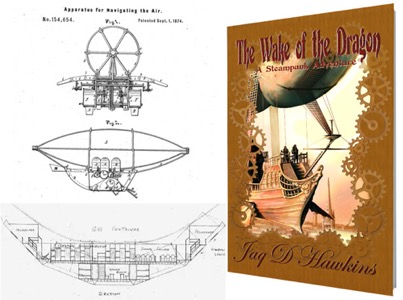
Some of this is more apparent, like in Historical Fiction where knowledge of the era and small details can make all the difference in the feeling of reality in the setting. Even in Alternative History, like my Steampunk book, The Wake of the Dragon, I did a fair bit of research on Victorian England, the opium trade and the East India Company’s role in it.
Imagine my surprise when I learned that historically, people living in the fens of East Anglia used to grow poppies and give opium to their children to chew to keep them quiet!
In order to have airship pirates as my characters, I also needed to do some study on dirigibles to see how they were constructed and how they operate. It was all rather fascinating.
Similarly, in Science Fiction, there needs to be enough scientific plausibility to give the story an impression of reality. Much of the science might be theoretical, but some basics in known Physics or rocket science makes all the difference. This shows in much older science fiction where less was known about space itself, as well as the engineering behind space travel. The reader has to make allowances for past ignorance and let imagination take over, while more modern stories will incorporate knowledge gained from recent discoveries.
 In discussions with other authors, I’ve heard about them going down rabbit holes online to find references as obscure as what metals were used for making cutlery for Victorian workhouses as well as technology levels for different eras and places. An old Star Trek episode comes to mind, where some of the crew went back in time and found themselves in a computer room like those I remember from childhood, with machines as tall as men and huge reel-to-reel tapes to transfer data.
One quite common method for exploring settings far from where the author is sitting is Google Street View, which allows any of us to travel through a snapshot of time in any city we might need to explore for our settings. Looking up current prices for hotels and transportation routes and costs has also come into play for many writers.
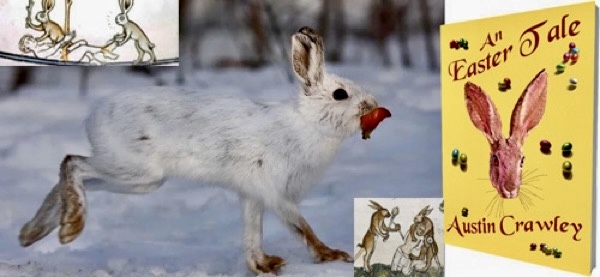
I know a Horror writer who is writing an Easter Horror book, which I’m really hoping will be released before the holiday this year. There is loads of material in his research about Medieval illuminations that show rabbits or hares wielding weapons or attacking humans, but imagine his joy when his researches revealed that snowshoe hares eat meat during the winter. They actually eat the flesh of their predators, or in a pinch, turn cannibal and eat each other! Imagine what a Horror writer can do with this information.
Even in the realm of Fantasy where we make up a lot of the rules of the world, a nod to reality can mean doing extensive research of a subject. Alchemy, for example, which often slips into my own Fantasy books and such things as the difference between a circus and a carnival which can totally ruin the suspension of disbelief when a writer gets it wrong. (Hint: a carnival doesn’t have a Big Top. Circuses have performances in tents).
 Even the aerodynamics of dragon flight reads better if the author has made some effort to learn how real flying animals stay aloft and can incorporate some realistic sounding biology into the Fantasy world.
We live in a more sophisticated society than readers from previous centuries and as such, making a story feel real requires a certain amount of reality adjacent study. Whether you’re writing a YA novel that will benefit from current information about how high schools function compared to what they were like when we went to school, or a Romance that takes place in an exotic location we’ve never or only briefly visited, some kind of investigation into details is what will make our stories immersive and keep readers coming back for more.
What’s the most interesting research you’ve done for one of your stories?
Jaq D Hawkins
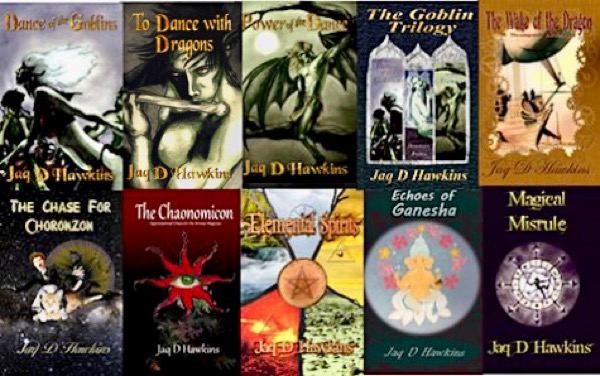
Books available at:
Amazon:
 Chris The Story Reading Ape's Blog
I do a lot of research for my books as they are geared for middle grade readers and I don’t want them getting the wrong information. They still believe everything they read!
LikeLiked by 1 person
I love doing research, and I’ve gone down that rabbit hole with both my historical novels. It was a lot of fun, even if it had me in a strange place at the end of the day!
LikeLiked by 3 people
I also enjoy it, especially when it involves history.
The rabbit hole can be a fun place. You learn all the interesting things the schools don’t tell you about!
LikeLiked by 2 people