

How often do you read your own books?
This is something I’ve never discussed with other authors, so I’ll bring it up here. Most of us have books that were published years ago. When they were first released, we had read them a zillion times to make continuity changes, editing adjustments, proof reads and all the steps towards polishing a finished book.
By the time you’ve read your own book so many times, it’s almost impossible to read it with the objectivity your target readers will experience within it. It’s just too familiar and the ghosts of previous versions are still lurking about in your mind.
Roll on several years and more book releases and that same book becomes less familiar. You remember the plot and characters, but not all the phrases and nuances of language you applied to make the story come alive, unless you have a photographic memory. If it has been long enough, you might even have forgotten a few plot twists.
At least I did.
Last month I read a book I published in 2017. I hadn’t read it since. The copy I had contained a few cringeworthy typos, but when I checked the master files, I found with relief that they had all been corrected, apart from adding a couple of commas.

The thing is, after seven years, I had forgotten some of the details in the same way you might forget plot points in someone else’s book you hadn’t read for a similar length of time. I had moved on, written other books, and this one had faded into imperfect memory.
As a result, I was able to enjoy the story almost as much as if someone else had written it. I remembered generally what was to happen, but my faded memories allowed the details to feel fresh and new, even occasionally surprising.
This led me to thinking that perhaps I should go back and read all of my older books, to experience them as if for the first time, though I already know the plots and how they end. Much of the pleasure of reading comes from enjoying the journey and use of language rather than discovering the twists and turns that plague the characters.
There’s a common saying: “Write the book you want to read.”
I’ve always agreed with this philosophy. What drives me to write fiction in the first place is the need to create stories that appeal to my own reading preferences. How many times have we been reading a story and thought that if we were writing that story, how we would have taken the plot in a different direction or made a character different in a way that we believed would suit the story better? I think we’ve all had this experience.
The real pleasure comes in finding things that still feel very clever. A turn of phrase, a minor detail, even a plot twist that after years of not thinking about it, strikes us in a way that we know will make readers enjoy the story all the more.
When is the last time you sat down and read one of your older books as if you were a new reader? I highly recommend it. Yes, there is a risk that you might find something in your debut that makes you glad experience has improved your writing, but overall, a dose of new objectivity can clarify where you are in your writer journey.
Don’t be too critical. If someone bought your book and gave it a good review, you’ve created something worthwhile. Now it’s time to enjoy it.
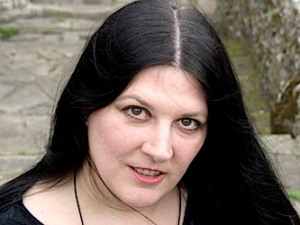
Jaq D Hawkins
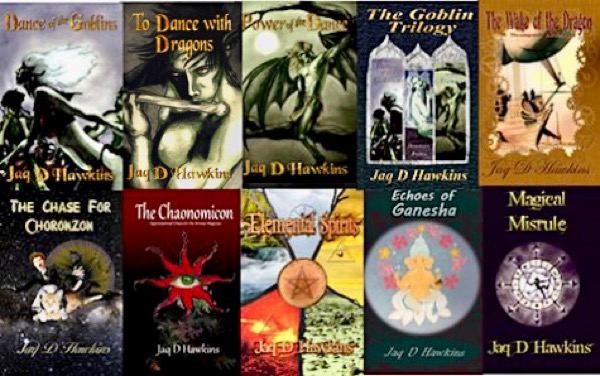
Books available at:
Amazon:
 Chris The Story Reading Ape's Blog
Once published, I never return to a novel. Never. Good bad or indifferent It is out there and bugger all I can do about it. Thirty seven books and only once I returned to one of my books. My publisher wished to release a twenty-fifth anniversary edition. I enjoyed redoing my book, playing with the update and adding an alternative ending. Lol- readers should get a little extra for the money.
However, recently I received a legal claim that I had plagiarised an artists cover. I do not do the covers, I had not and the claim was dismissed but when looking at the similarities in the cover I could see why the claim was made. The style was very similar. So I started rereading the book. “Hiding from the Light”, “A Collection of Gothic Tales”.
I think it is probably a good idea to revisit earlier works. I loved my book, forgotten over time. Lol- I think I was a better writer then than I am now. Weird.
LikeLiked by 1 person
Sounds like an interesting book too, I love Gothic!
LikeLiked by 2 people
I need to re-read my debut novel. I give details about my protagonist’s family that I need for Book 3. I tried to skim through it to find what I was looking for but I could find it.
I suppose it’s important to do this, especially with a series, but I’ve been avoiding it. Right now, I’m reading about the Resistance in France during WWII. Seems important with what’s about to happen here in the US.
LikeLiked by 2 people
I’ve developed a habit of taking notes on what’s in each chapter. Nothing extensive, but just some reference to what happens in that chapter so it’s easier to dig for retrospective information!
LikeLiked by 2 people
An excellent post Jaq… I tend to serialise my books after a few years and read through the chapter or story before posting. Thankfully not too many typos but I do notice how my writing style has changed over the last 25 years. I agree you do forget some of the details and it is also sometimes a nudge to write a sequel… thanks very much Chris for hosting. ♥
LikeLiked by 3 people
I keep trying to write stand alones, but those pesky goblins sneak in everywhere!
LikeLiked by 2 people
Jaq, this is a lovely and engaging post. I really enjoyed reading it. I’m glad you did that with your books, and I think it’s a good idea for all of us.
Chris, thanks for hosting. Hugs to you both.
LikeLiked by 3 people
Of course now I have to read all of them. There goes my tbr!
LikeLiked by 1 person
I’m proofreading a draft of a book I wrote a long time ago. It is terrible, but I’ve not worked on it long enough or in enough detail to hate it. Sometimes, well, once or twice, someone has mentioned a character in a book I’ve written and I can’t remember who. Other times I’m looking for something and read a short story I’ve written so long ago it might well have been written by someone else *(it was, me).
LikeLiked by 4 people
Re-reading the unfinished books is another kettle of fish.
You still have the chance to improve it!
I have far too many unfinished books and have to totally re-read them when I’m pushing to finish one.
LikeLiked by 3 people
I agree with this. I read from my older books when I visit schools and I am always surprised that they are quite good. Yes, I’ve learned a lot since my first book was published in 2010, but the stories are fun and interesting. A nice reminder when you are feeling unmotivated that you can actually write a good tale.
LikeLiked by 4 people
That is part of the joy of it, rediscovering the bits you did really well on.
LikeLiked by 3 people
I haven’t had the courage to re-read my older books, although the first was published in 2018. I think I would find so many things I could do better.
But I think I’ll give it a go.
LikeLiked by 5 people
It can be a scary thought when you know you’ve developed since then, but it can also be a pleasant surprise!
LikeLiked by 2 people
Well. I’ll start reading as soon as I finish my current read.
LikeLiked by 3 people
Having started publishing my books in 2010, I have read them for pleasure a few times. My experience was similar to yours. It was especially good not to be looking for things that needed to be corrected or revised.
LikeLiked by 2 people
Yes, to read them with a reader’s eyes instead of an editor’s is an amazing experience!
LikeLiked by 2 people
I certainly agree with you. I think my old stories are pretty good. I laugh, and some scenes bring tears to my eyes. Sure, I find things I could edit, but I resist the urge. That story is cast in stone now. I recently re-read my very first short story, written in the 1970s. I’d totally forgotten what happened. It was dang good–despite the needed edits.
This is true even for non-fiction. My first published book from the mid-80s was on Artificial Intelligence. I was explaining AI to lay readers, which I had to research since I knew nothing about it. I even drew cartoons to illustrate it. (“Understanding Expert Systems” published by Bantam.)
I’m currently updating workbooks for small business owners I wrote in the ’90s and ’00s. I think, “Wow, I wrote that 25 years ago? That was pretty good!”
Glad to hear others have the same experience.
LikeLiked by 5 people
Ah yes, the non-fiction. I’ve got some of those, and re-reading has been necessary for various reasons, especially when I consolidated a set of five into one volume.
Seeing what else should have been included can lead to writing new books on the subject. It’s never ending!
LikeLiked by 2 people
I consolidated a number of workbooks into one full-length book, and it was difficult. In a workbook, I mostly ASK questions of the reader. To transform it into a book, I must ANSWER those questions. That takes a lot more work.
LikeLiked by 2 people
Good luck! Sounds like a whole new project of its own!
LikeLiked by 1 person
I have read where people say NOT to read your earlier published work. That you will be angry & feel sick. Glad to know that is NOT the case for many of us. My debut novel was extremely important to me so I was very please when an author acquaintance said she read it & liked it better than the prequel.
Many of my biggest fans are authors & it’s about half & half the ones who prefer one book over the other. I guess that’s a good sign I did a good job on them both.
LikeLiked by 2 people
That’s the scary part, wondering if it might turn out to be rubbish.
But if it was commercially published and has good reviews, it can’t be all bad! Even self-published with good reviews is a good sign.
LikeLiked by 1 person
I often find myself amazed at how good my old stories are! 😀 … not that they couldn’t be tweaked, but the bones are, almost, alway solid. 🙂
LikeLiked by 5 people
It really helps confidence and self-appreciation!
LikeLiked by 1 person