
 Yes, you read that right. A total misnomer, as us pantsers generally don’t outline our stories, but discover them as we go along.
Even after more than forty years as a published writer, I still read articles on the craft of writing regularly. Naturally I’ve come across various charts that lay out story structure, some more detailed than others.
Mostly I’ve looked at these with curiosity and noted how my own stories invariably fit into these structures, though I hadn’t consciously decided beforehand that plot points or twists needed to fit into specific percentage locations of the story. Some natural instinct, probably from being an avid reader since a small child, just made the stories come out that way.
While I doubt I will ever be someone who sits down and outlines a story in detail before starting to write, I did develop a habit of retrospective outlining, in that I would write a few notes about what happened in a chapter I had finished. I did this so I could more easily find chapters that might have to have foreshadowing or other details expanded because of something that happened later in the story, which I didn’t know was coming at the time I wrote the earlier chapters.
A year or so ago I came across a formula for writing short stories and actually started to follow it when writing for anthologies. It divides the story into five segments to loosely target with a similar word count. I discovered that I could get plot ideas from this that related to the formula and what needed to happen next.
 More recently I read an excellent series of articles by K.M. Weiland [Story Structure Intro] that goes into detailed analysis of story structure. This series fascinated me in a way that has had me analysing stories I read for pleasure, seeing the places where the narrative is following the structure she describes.
The question is, how does this affect my dedicated pantser writing methods? Half the fun for me is discovering the story as I go along. Too much planning would spoil that for me.
What I’ve done as a compromise is to take notes based on her formula charts with the intention of using them as prompts. I noted that with various works I have in development, I can place the points from my notes on a timeline that draws out where in the story that particular plot point would fall if I were to follow the formula. Then I fill in the places between as my wild creativity dictates.
The idea of this is to show me that if X is happening in the beginning and Y is happening near the end, but Z happens just after half way, what would I need to do to run up to the points I’ve established if I want to consult this formula for pacing? And if the answer is to give the MC hope and then have a complete reversal, that triggers ideas for how I might do that.
That doesn’t make me a planner, just a magpie. I’m borrowing structure prompts from the planner to apply in my own pantser way.
 Writers all have their own processes for how to write their stories. Mine is constantly evolving and I don’t mind learning from the methods others use, albeit in my own interpretation.
I quite enjoy letting my characters take over and take me down paths I never imagined beforehand to create the stories we tell together. If the end product tends to resemble a recognised structure, well it isn’t because I planned it that way. But having an awareness of how these structures work is beneficial to us pantsers as much as to the most meticulous planners.
Some great ideas can come from knowing that you’re at a point in the story when doing something really brutal to your characters would be just the thing to keep things interesting. Or perhaps from a reminder that having tormented your poor MC already, it’s a good time to give them a break.
How about you? Do you work from a formula or just write and see where it goes? Some balance of both? Let’s chat in the comments.
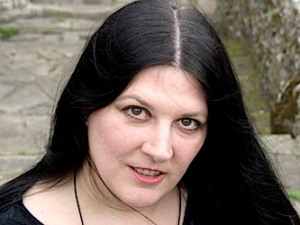
Jaq D Hawkins
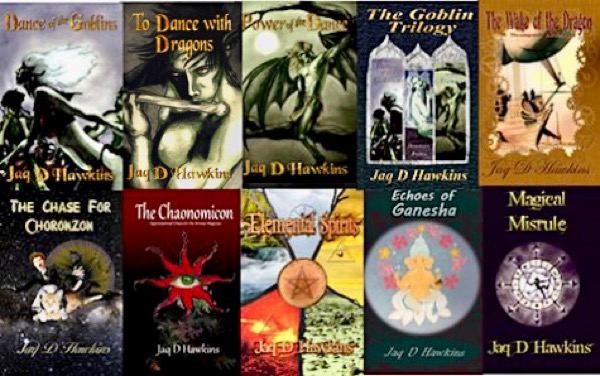
Books available at:
Amazon:
 Chris The Story Reading Ape's Blog
I’m with you and Stephen King. I love experiencing what my little gray cells do quite on their own. I don’t outline, but I do have a file with ideas in it and will rearrange it when I set out to write.
LikeLiked by 2 people
I keep a file for notes for each project. That’s where ideas and bits of scenes go, then I have a look before starting each chapter.
LikeLiked by 2 people
‘Some natural instinct, probably from being an avid reader since a small child, just made the stories come out that way.’
That’s me as well, and I, too, love discovering the story as I go along, but…I have to admit I’m not a pure pantster. When I hit the middle, I inevitably have to do some plotting to keep the threads from snarling, or writing myself into a terminal corner. At times my version of plotting is simply research, or working out a tricky timeline, or realising that character X simply wouldn’t behave ‘that way’, no matter what. But whatever it is, I have to apply logic to it. Once past that hump though, I can see/feel where the story must end, and the words just flow.
I’ve talked about StoryBox before, but it’s worth another mention. Along with Scrivener, StoryBox is dedicated writing software that allows me to create a quick and dirty ‘outline’ through the use of scene labels. Thus I can see at a glance what I’ve done and what still needs to be done [e.g. for foreshadowing]. It also allows me to move whole scenes with the click of a button if I need to restructure parts of the story.
I truly believe all writers would benefit from dedicated writing software, but especially pantsters, as inspiration often hits in the wrong spot/part of the storyline. Being able to move that inspiration where it really needs to be makes for a much tighter, stronger plot from the Reader’s perspective. 🙂
LikeLiked by 2 people
I’m rather new software shy, but made my own template in Word for a graph where those notes go. Just a basic chart of boxes for each chapter and a line or two to keep track of what happens where as I write it.
Some of my subplots come from totally random things. Like some goat stickers that I came across yesterday while online shopping. Suddenly my WiP has a goat involved who becomes an animal companion character. But as the story also involves dragons, I’ve found another source of food for them in some rather stark mountains, as well as a reason this goat has to become significant, as the MC determines not to let this one become dragon food.
The stickers will make good swag for the Kickstarter. 😉
LikeLiked by 2 people
Oh I love that organic development of the plot! Everything makes sense and that’s very important to me, both as a writer and as a reader. Can’t stand those ‘what the…?’ moments when an otherwise good story suddenly takes a ‘this is how things are so don’t question it!’ turn. lol I always questions things. 😀
I don’t want to push the software side of things, but StoryBox, at least, was easy to get the hang of, and it would make your life a lot easier. -cough- End of.
LikeLiked by 2 people
I never know what is going to happen until I get there. In that sense, I’m very much like the reader encountering the scenes, etc. for the first time. Writing as a reader I tend to instinctively recognize when something needs to happen – adding the arias among the recitative. Sometimes these turn the story in a direction. Often, though, they’re only a break to keep things interesting before resuming where I left off.
LikeLiked by 2 people
Exactly, “Like the reader encountering the scenes”.
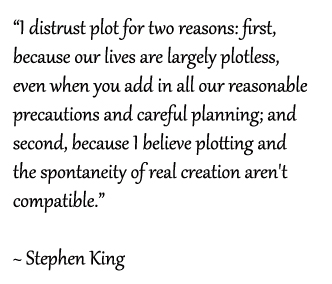
This fits right in with the Stephen King quote above. He’s one of us, the pantsers.
LikeLiked by 1 person
Oh, yes! I had a subspecies of dwarves arrive something like that. They are reclusive and no one knew about them.
When my characters were running from the enemy and were trapped in a cave, they found a narrow crack at the back and squeezed through, eventually coming upon an underground city that even I didn’t know was there.
LikeLiked by 3 people
Those are the most fun scenes!
LikeLiked by 1 person
Aren’t they? I had great fun with it. They also gave my heros a big problem because they wanted to remain unknown and so refused to let them leave.
LikeLiked by 2 people
Excellent. What book is this in?
LikeLiked by 1 person
It’s in book 3 of my fantasy series called The Wolves of Vimar. It can be read as a stand alone, I think. At least, although there is a story that runs throughout the series, I try to give enough info about what has gone before that people aren’t completely lost. This book is called Wolf Moon.
LikeLiked by 2 people
I usually have no idea where my story is going until my characters do…
LikeLiked by 3 people
It’s so refreshing to have someone actually say it’s alright not to plan. I read a lot of posts on writing; the majority of which tell me to plan.
Not that those planning posts are useless to me. It’s just that I don’t, and can’t, do it in such detail as is suggested by many of them. I know where the story begins, and where it ends, but between the two is a wonderful discovery.
LikeLiked by 2 people
Exactly the same for me. Most of my stories start with an idea for a premise and how to begin the first 500 words or so. Once I get that far, ideas of where to go next start rapid firing.
In my first novel, I had no idea how it was going to end until I got to it. Some stories come to me with an ending. What happens in between is a journey of discovery.
That’s what makes it fun for me.
LikeLiked by 2 people
I think story structure was discovered by people studying completed works, but it’s possibly inherent in storytelling. When I write, I have a beginning and an ending, and work out the stuff in between as I go along, with only the sketchiest of outlines for the next scene or two. Once I finish the first draft, I may make changes that end up matching those story structure charts.
LikeLiked by 2 people
I get discarnate scenes a lot of the time with no idea where they go at the time. Working them in tends to trigger more ideas. Most of the time I have things falling into place for the next couple of chapters.
Occasionally I deliberately write myself into a corner. Like in Dance of the Goblins when Count Anton got thrown into a dark pit in the goblin caverns. I had no idea what was at the bottom as I wrote it. The next day, a whole species of water goblins was born. They also supplied a subplot for why Talla looked different from the other goblins.
LikeLiked by 2 people
I hope even the strictest of plotters would allow for such gifts from the work itself.
LikeLiked by 2 people
Spontaneity or not shows in the writing!
LikeLiked by 2 people