
 I spend some time lurking in reader groups, noting what readers of various persuasions have to say about the books they enjoy and what things they don’t.
Occasionally the subject of prologues arises, with varying opinions expressed. One thing I note is a lot of young readers outright say they don’t read prologues! Yet some stories benefit from using them.
For example, when I wrote Dance of the Goblins, chapter one started with slow action that would escalate substantially by the end of the chapter. One of my beta readers suggested it could use faster action at the start.
I gave this some thought and decided a prologue would fit well. I used some of the secondary characters to ignite the situation that the main characters would be dealing with in chapter one, but from a different point of view. This improved the beginning of the story, putting things into context.
This is one of several ways a prologue can be used to good effect. I believe the reason they have come into unpopularity is by less effective use, especially for info dumping. If a prologue lasts for more than three or four pages, it is worth assessing whether this might be the case.
 The odd thing is that series prequels have become popular. Prequels actually serve the same purpose as prologues, introducing the reader to a world and either the characters in the first story or a previous generation that is significant to the story to come.
When writing a prologue, this is good to keep in mind. The prologue usually reads like a separate short story, bringing elements of the story world into play.
But if the reader isn’t going to read your carefully crafted prologue, why not do what a lot of people in the reader groups suggest and just call it chapter one? This is one way to sneak in the prologue. It requires a time/place shift for chapter two, which can be done with a heading giving a date or reference to place or other relevant information.
The other way I’ve seen in a lot of older Fantasy books is to leave off the header and just start telling the story. By the time the reader comes to a header for chapter one, they’ve already entered your world through the undeclared prologue. It gives the impression of a preview, which of course is effectively what a prologue does.
Not every story needs a prologue. When writing one, it’s a good idea to assess whether the information presented could be worked into the narrative in chapters to come. Is it mostly exposition? Then the answer is probably yes. Is it action that has an effect on the story from the start? Then it’s probably justified to include the prologue.
 The next thing to decide is whether to pander to the sort of readers who proudly declare they don’t read prologues or to write it as we please and call it literary. This is a personal decision for every writer and for every project.
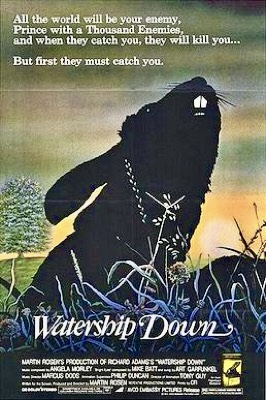
One more way to slip in a prologue is to call it something else. The story, Watership Down, comes to mind. The mythology of the black rabbit was important to the context of parts of the story. In the movie version, this is told in a prologue sequence.
The book itself just launches into the story and the mythology is worked into the narrative, but it might have actually benefited from a two or three page prologue to tell the mythology, which could have been titled something like The Mythology of the Black Rabbit.
As long as it wasn’t too long, readers would mostly be happy to read such an introduction. That’s what most prologues are, an introduction to your world.
Do you read prologues? Have you included a prologue with your stories? What was the idea behind it? How long was it? Let’s discuss this part of the writing process in the comments.
Jaq D Hawkins
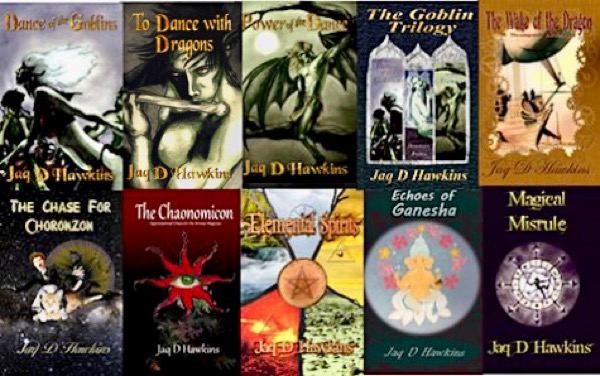
Books available at:
Amazon:
 Chris The Story Reading Ape's Blog
My children’s books don’t need a prologue although my children’s chapter book does… (being written)
I usually read a prologue but often after reading the story. The best prologue? In Winnie the Pooh, of course, that’s where you learn that Piglet is more intelligent and why? LOL
LikeLike
I wonder if the problem is that they are mixing it up with a foreword or introduction as there might be in their textbooks—something boring and unrelated and not to be read unless the teacher insists on it. In my mind, a prologue is definitely part of the story, so why would I skip it? And if it helps me feel more at home in the book’s world, or tells me something I need to know to make sense out of the story, I absolutely want to read it!
LikeLiked by 1 person
For other occasions i am a master in writing prologues. Lol This here is definitely a great idea. Thanks for sharing, Chris! I hope you are enjoying a great weekend! xx Michael
LikeLiked by 1 person
I’ve included a short prologue in Book 4 of my Bad Boy Wizard series (Book 1 out in June!) because it’s stuff that happens some years before the story starts and sets up important action in the main story. Not sure if I could call it Chapter 1; I’m kind of hoping that by the time Book 4 comes out kids will love the series enough not to be put off by the word ‘Prologue’!
LikeLiked by 2 people
That’s a good reason for a prologue.
I would suggest titling it like an old fashioned chapter title to bypass the prologue censors.
LikeLike
I think prologues became unpopular for the same reasons passive voice and semi-colons did: some writing or publishing course instructor told students incapable of forming their own opinions that prologues (&c.) were bad.
LikeLiked by 2 people
That’s a possibility.
LikeLike
A very useful post thanks Chris and Jaq…
LikeLiked by 2 people
Thanks Sally!
LikeLiked by 2 people
I think the main thing is for the first section of a book to be intriguing and engage the reader. It doesn’t matter whether it’s labelled a prologue or something else, but if one is writing for a demographic that avoids things called “Prologue,” then don’t call it that.
LikeLiked by 2 people
Exactly. It makes me wonder what the English Literature teachers are telling their students these days.
LikeLiked by 2 people
Prologues. (Prefaces and Forewords and Introductions–oh my) And don’t forget Epilogue.
I usually read the prologue, because it should set up the story. The epilogue I never overlook, because if it’s a good story, I’m hungry for more. I also dig into the author bio.
I just completed the book my wife was writing when she passed away. I took the first part of Chapter 1 and made it a prologue. It was just over a page; it was the only part of the book in first person; it introduced one of the main characters; and it hinted at major themes in the story.
LikeLiked by 2 people
Sorry to hear of your loss.
Well done completing the story though, I’m sure she would be happy about that. It sounds like a prologue was well justified in this instance.
LikeLiked by 1 person