

Last week, we discussed how the descriptive narrative of a story is comprised of three aspects:
Narrative point of view is the perspective, a personal or impersonal “lens” through which a story is communicated.
Narrative time is the grammatical placement of the story’s time frame in the past or the present, i.e., present tense (we go) or past tense (we went).
Narrative voice is how a story is communicated. It is the author’s fingerprint.
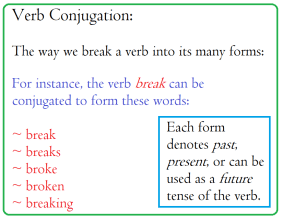 Today we’re discussing how narrative time, or what we call tense, affects a reader’s perception of character development. In grammar, tense is a category that expresses time reference. Tenses are usually shown by how we use the forms of verbs, particularly in their conjugation patterns. The main tenses found in most languages include the past, present, and future.
The way that narrative tense affects a reader’s perception of characters is subtle, an…
View original post 1,109 more words
 Chris The Story Reading Ape's Blog
❤ Thank you for the reblog, Chris! 😀
LikeLiked by 1 person
Welcome, Connie 👍🤗
LikeLike