
Fiction publishing, both indie and big publishers, has become very series oriented over time. This is especially true in certain genres, which include Fantasy, Romance and Mystery.
This is not something new, though it has evolved into a business model in the twenty-first century. In Fantasy, it really got started in the 1970s when Tolkien’s Lord of the Rings trilogy hit a sudden wave of popularity, despite having been published between 1937 and 1949.
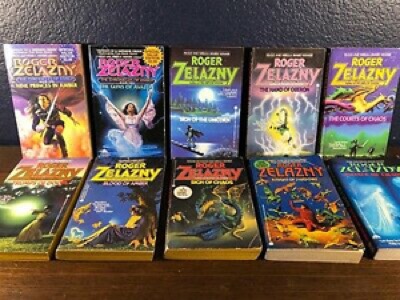
Suddenly every Fantasy writer wanted to release a trilogy. Some were braver and went for longer series, like Roger Zelazny who wrote the ten stories that comprise The Chronicles of Amber and the partnership of Margaret Weis and Tracy Hickman who wrote the seven books of The Deathgate Cycle, many of the Drangonlance novels and many other books and series.
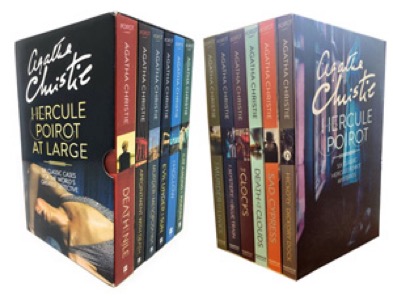
Mystery readers who have been around a while will be more familiar with series of stand alone stories, often featuring the same character, like Agatha Christie’s Hercule Poirot. Each of the stories comes to a tidy conclusion, yet the reader can go on another adventure with their favourite character and solve a new mystery. The important aspect of this is that the end of each story leaves the reader satisfied. The mystery is solved.
Romance, when I was a teenager, mostly consisted of stand alone books as well. Often books were grouped together as the same sort of stories, but each story came to a full conclusion. This changed with the self-publishing boom of 2010 and some bad or misinterpreted advice to young writers to hook a reader with the first book and keep them going so they buy a never-ending series. When this is done with cliffhanger endings, the reader has effectively bought an incomplete story. If they want to see how it comes out, they have to buy the subsequent books.
To be fair, this wasn’t unknown in older writing, but the nature of it has changed. When I read The Deathgate Cycle and The Chronicles of Amber, I knew from the start that the serials followed an overall arc and I would hunger for the next books. Everyone knew The Lord of the Rings was effectively one book split into three volumes.
What is different in the more recent series in all of these genres is that it is blatantly used as a sales tool. The writing skill that went into the series I’ve cited is too often missing in the plethora of serials added to the market every day. Novels get cranked out once a month by some writers and the contrast to those that benefit from the author taking the time to develop story detail and nuances of language after the first draft is gargantuan, yet many of these quickly churned out serial books find a readership with compatible expectations.
As a reader, I find this abhorrent. I’ve made sure in my own series books that each one comes to a satisfying conclusion and that is a quality I look for in books I choose to read. The series I’ve enjoyed most all have one aspect in common; you can stop after any book in the series and feel you’ve read a complete story. The only exception was The Lord of the Rings, which like everyone else, I accepted as a story in three parts and bought a full set.
Mary Stewart’s Merlin series is a good example. I thoroughly enjoyed The Crystal Cave, The Hollow Hills and The Last Enchantment, one book at a time. Each a complete story but with an overall arc that fit together. Two more books were written for the series. I didn’t enjoy The Wicked Day as much, so when it came to re-reading, I didn’t bother with it. I’ve never read The Prince and the Pilgrim and still don’t feel I’ve missed anything in the series by stopping at the Trilogy.
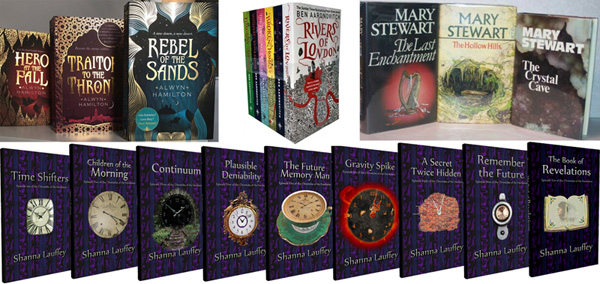
Some modern Fantasy series books are satisfying individually as well. The Rebel of the Sands series by Alwyn Hamilton was particularly good and I read all the books because I wanted to, not because I felt anything missing. Same with Shanna Lauffey’s Time Shifters Chronicles, aka The Chronicles of the Harekaiian. This one is technically SciFi because it’s time travel, but reads much like a good Fantasy or Mystery. With ten books in the series, each one still came to a satisfying conclusion.
In the realm of Mystery, a good modern series is The Rivers of London series by Ben Aaronovitch. Like the other series I’ve mentioned, there is an overall arc, but a reader can stop any time and still feel like they got the full story they paid for.
Romance is especially guilty of the never-ending cliffhanger serials. However there are some exceptions. Helen Harper is one author I would recommend to those who enjoy a little Paranormal Romance. Sarah Maas brought her fae world in A Court of Thorns and Roses to a conclusion I felt gave me the choice whether I wanted to continue or not.
As writers, I feel we have an obligation to finish our stories properly. If I pay for a book, I feel cheated if it finishes with “Buy the next book to find out!” I’ve read many first-of-series books that used this ploy and I refuse to continue those series. How about you? As both readers and writers, what are your feelings about cliffhanger serials versus stand alone books?
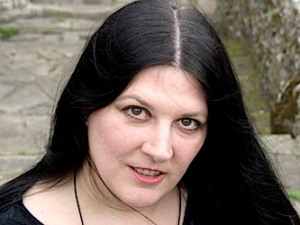
Jaq D Hawkins
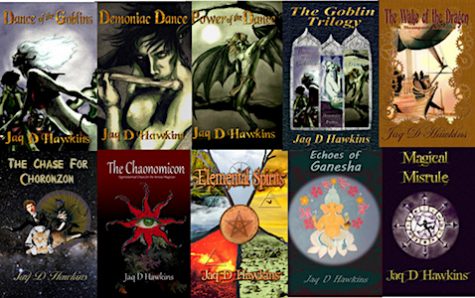
Books available at:
Amazon:
 Chris The Story Reading Ape's Blog
Thanks for mentioning the Death Gate Cycle. I have all seven books and re-read all seven just recently. Each book is a complete story in its own right, but as you say, the over arching story is revealed one book at a time. I never felt the need to hurry Haplo along. Each book was necessary because it was about him /changing/, and change takes time. It also takes nudges from external events.
To be honest, I love trilogies because once I’m immersed in a world, I don’t want to leave. 🙂 Cliffhangers though, no, I don’t like them so much.
LikeLiked by 2 people
Deathgate was the first series I read that was longer than three books. How times have changed!
LikeLiked by 2 people
lol – yes! Now you mention it, Death Gate was my first looooong series too. Oddly enough, re-reading all seven books just reinforced how good the whole story/concept was. High Five 🙂
LikeLiked by 1 person
I hadn’t even considered that yet. But it’s really true. As a reader, you always expect a satisfactory ending even with a series. Psychologically a kind of “short version” to be able to continue with the FollowUp as it were when meeting a friend again in knowledge of the character. Thank you for bringing this into my mind. Michael
LikeLiked by 3 people
It’s something to consider if you’re writing a series. It’s possible to wrap up the immediate action and still have longer range events left open.
LikeLiked by 2 people
Thank you for the tips, Jaq! Always appreciated! Have a beautiful rest of the weekend, and a good week arriving. Michael
LikeLiked by 1 person
Love Sherlock Holmes GG
LikeLiked by 2 people
The success of those books suggests something was done right!
LikeLiked by 3 people
Exactly! GG
LikeLiked by 1 person
I agree with you about series. I read the Jack Vance ‘Lyonnesse’ Trilogy as it was published. They came out so far apart that I had to re-read the books so far before reading the new one! 🙂
I prefer to read and write ‘collections.’ As with the Sherlock Holmes stories, you can read any of them in any order. Same world, same people but each totally stand alone
LikeLiked by 2 people
That is also true of the Darkover books by Marion Zimmer Bradley. Sme of the late ones that were finished after her death fell into triologies, but most of them (over 25) could be read in any order. That was a favourite series for me for many years ad I still have a few of the best ones around for re-reading.
LikeLiked by 2 people
You get the joy of immersing yourself in a world without having to worry about order 🙂
LikeLiked by 1 person
I’ve considered expanding my Goblin world for that reason. Maybe writing more books in the world with different characters, occasionally crossing paths with established characters. A bit like Anne Rice did with her vampire books. I do have short stories churning out that take place if various parts of the timeline.
LikeLiked by 2 people
The thing about ebooks is that it’s as easy to publish a novella as a novel 🙂
Actually I’ve found with the Amazon paperbacks you can stick anything over about 30K words into a paperback happily enough as well
But I like doing it with Port Naain and the Land of the Three Seas because it gives you a chance to explore the background, but also see the same background through different eyes 🙂
LikeLiked by 1 person