
By Ben Guarino  on The Washington Post:

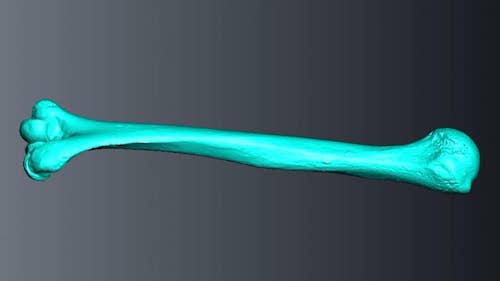
A scan of an upper arm bone from a prehistoric woman agriculturalist. This bone is from a North African population, which was not part of the study, but is an example of the research method. (University of Cambridge)
 Chris The Story Reading Ape's Blog
Jumped through & read the article – fascinating stuff. There’s been similar archaeological work in NZ where it’s been shown how heavy muscle-development left its mark on the bones (usually asymmetrically) – everyday life was hard labour for men and women alike. Oddly enough, in earlier days I used to think that prehistoric women were constantly being rescued from the clutches of Pterosaurs’ claws by time-travellers from the future, while Thog the Cave Man threw polystyrene boulders at them, but maybe that was just the kind of movies I used to watch on TV re-runs…
LikeLiked by 1 person
You watched 1,000,000 B.C. too many times, Matthew 😄
I suspect that if they did a little research of women worldwide, they’d find similar results in various parts of the world even today,especially in agricultural areas, where women, as well as men, work the fields, land or paddy fields AND carry humongous loads on their heads or backs.
LikeLiked by 1 person
That’s the one! It always fascinated me how Hammer studios’ Cave Women always looked like Raquel Welch, whereas Cave Men were brutish, hairy characters who went ‘ugh’ and solved all their problems with wooden clubs… I agree on the likelihood that agriculture anywhere in the world likely drew in the whole labour force – managing fields is absurdly labour-intensive without machinery, and there’s some evidence emerging now that the hunter-gatherer societies it replaced were materially less labour-intensive (especially for men – the women did the bulk of the actual food-gathering).
LikeLiked by 1 person