

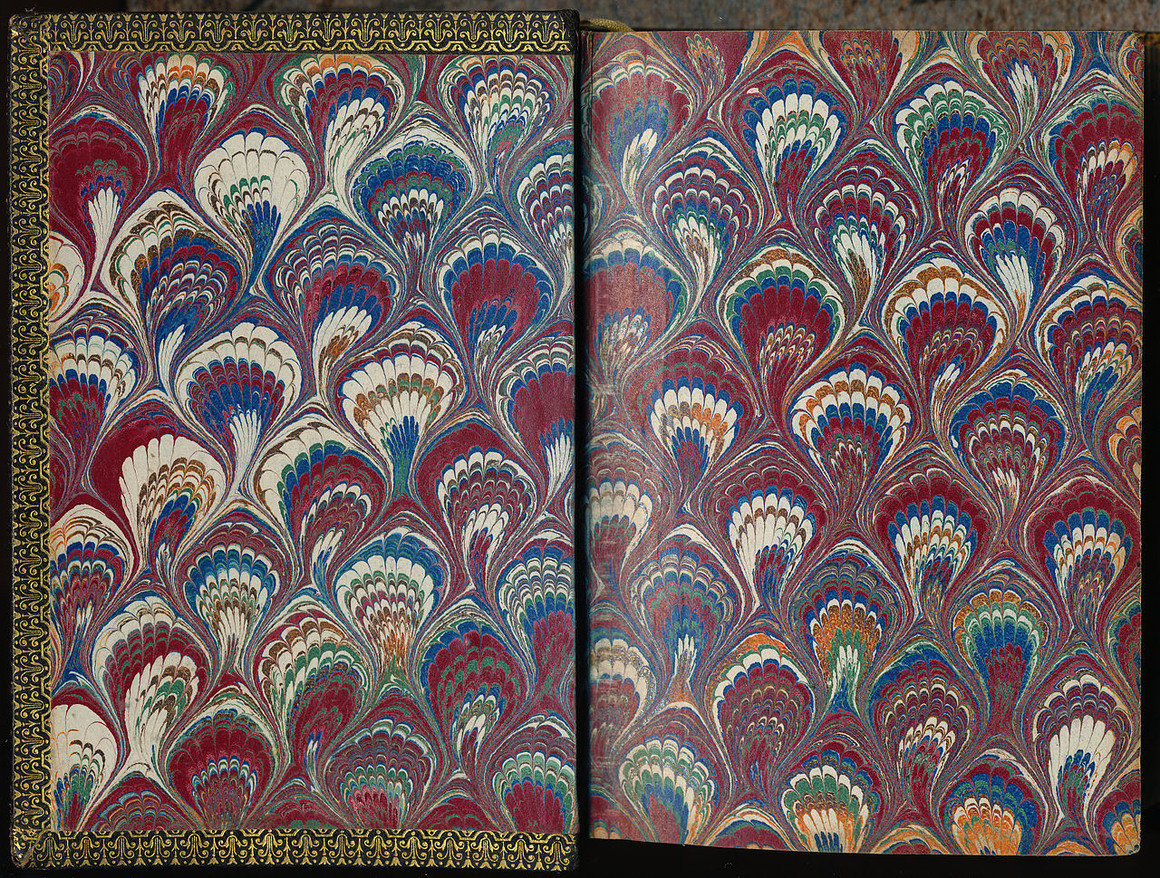
 Marbled endpaper from an 1875 copy of Die Nachfolge Christi by Thomas von Kempis. PUBLIC DOMAIN. Image via Atlas Obscura
In the endless eBook vs. print debate, one aspect is rarely mentioned: the art of endbooks. And yet, as Sarah Laskow—my favorite Atlas Obscura blogger—points out, these can deliver a small jolt of wonder that perfectly complements a lovely book. An over-eager reader can breeze by even the most striking endbooks, yet they’re an art form with a history all their own.
An ENDuring Hostory
For centuries, designers have taken the formal necessity of joining a book’s pages to its cover and turned it into an opportunity for creativity. When a book is made, one side of an endpaper (sometimes also called an endpage or endleaf) is pasted into the inside of the book’s cover; the other side is the first page of the book. Originally, they were…
View original post 454 more words
 Chris The Story Reading Ape's Blog
Thanks for sharing this, Chris. 🙂 — Suzanne
LikeLiked by 1 person
Thank you for the share, Chris 🙂
LikeLiked by 1 person
Welcome Nicholas 👍😃
LikeLiked by 1 person