
I write what I call speculative fiction. Many of the definitions out there never really give a crystal clear idea of what the genres mean, so I picked this name and made my own definition. To me, speculative fiction involves at least one unreal element.
Speculative fiction is a big enough field to keep me happy. It includes paranormal, science fiction, fantasy, urban fantasy, horror, super heroes, and everything similar. I think I’ve dabbled in all of it to one degree or another.
One of the things I try to do is enough research to make it digestible. I’ve always said, “I don’t have to be perfect, I just have to be plausible.” The plausible parts make it easier for the reader to take that leap of faith when I need them to.
I did an extensive amount of research for my novel, Panama. I set this during the building of the canal, and there was a ton of history available. I included celebrity cameos in the story and many of them were in exactly the places I put them when they came into the story. I was amazed to find tour schedules for Lilly Langtree. It didn’t surprise me quite as much for Theodore Roosevelt, but he was the president and we tend to keep good records of their motions.
When it was time to introduce the demon and the black magic, I think the research made it all easier to digest. Right after I brought in the speculative element, I brought in Carlist rebels. These guys weren’t in America, but they were big in the power struggles in Spain, and the era is correct.
People often say science fiction and fantasy authors have it easy, because they don’t have to do as much research. I disagree on this point. The world we create still has to make sense. It can be as simple as water flowing downhill, or gravity making a difference in a deteriorating orbit. Injuries still hurt, bleed, and bruise. Getting these things right makes it easier to sell the speculative element.

Basic physics should come into play when dealing with swords and plasma rifles. Authors can write it any way they like, but these little bits make it all more believable to the reader. The difference between a great sword and a short sword is incredible. It’s much easier to recover and block with a short sword; the great sword does more damage – if you connect, if not you’ll be wide open for an attack.
Most readers will be familiar with the fact that guns recoil when fired. Your hand laser doesn’t have to, but it helps the readers get a sense of being there. Real guns give off a smell, and there’s no reason the hand laser can’t produce a whiff of ozone.
Fantasy readers get irritated when the heroes travel all day, throw a blanket on the ground and make stew for supper. This is because readers know stew takes hours to make. They understand that horses have limitations and can’t run 100% of the time. Animals are only capable of going so many miles per day. They need time to graze, and in some cases chew their cuds. Dried beans need a good long soak, if not a boil and soak, before you can eat them.
In a similar fashion we have to address the learning curve involved with new weapons. You can’t just pick up a sling and slay Goliath. You can bet David threw several tons of stones before making his epic shot. It’s good to research the weapons and even try to handle one before you write about it.
This idea applies to magic too. A training sequence only takes a page or two, but it’s always fun when your witch tries to figure out what to do with the animated banana she accidentally created. It adds a bit of whimsy, but also primes the reader for the possibility of failure at the worst time. Do a bit of research and find herbs that have a connection to magic, learn how an eclipse actually works so you don’t have the wrong celestial body casting its shadow. Maybe learn something about crystalline structure so you can describe it accurately.
It wouldn’t be out of line at all to learn the melting point of silver so you don’t have your werewolf hunter using a Bic lighter to cast bullets. Maybe you should read a book about reloading too.
I put this kind of effort into my speculative fiction. I’d appreciate it if you’d consider me for one of your next reads. I have two collections of short stories and micro-fiction priced at 99¢ each, if you’d like to try something without committing the time to a full length novel. If you prefer novel length, I have some of those too.
Blog – Twitter – Facebook – Goodreads
 Chris The Story Reading Ape's Blog
I like the definition you give to speculative fiction. It makes sense. I agree with the fact that the world we create still has to make sense.
And your fiction, both shorter or the novels prove your mastering this gift.
LikeLiked by 3 people
What a nice thing to say, Carmen. Thank you.
LikeLiked by 1 person
Helpful thoughts on plausibility, and I love the term “speculative fiction.” It covers a lot of territory and just sounds intriguing. One question, though — what is the purpose of the sexy female images I see on your posts? I finally have to ask. 😐
LikeLiked by 2 people
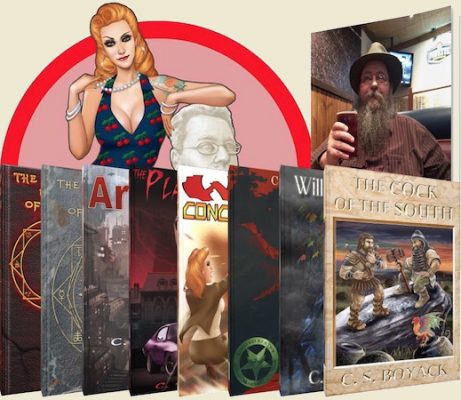
Chris added them, and I didn’t write about them this time. Lisa Burton is my robotic personal assistant, and the spokesmodel for my writing career. She also hosts a fictional radio show where she interviews the characters of other authors to help promo their work.
LikeLiked by 1 person
Thanks for explaining. Those gals reminded me of the scantily-clad women who draped over shiny new cars in ads some decades ago. 😉
Interviewing characters is a great idea. I ought to send one of mine to Lisa. 🙂
LikeLiked by 2 people
Please do. I have one up today. I try to post one every Thursday.
LikeLiked by 2 people
I agree about sci-fi/fantasy writers doing research – I’ve been researching black holes for my next book. And you’re right – plausible, not perfect.
LikeLiked by 3 people
Most of our world building is to enhance the character’s journey. Plausible keeps the reader grounded in the story and moving ahead. Glad you liked the post.
LikeLiked by 2 people
Reblogged this on Colleen Chesebro ~ Fairy Whisperer and commented:
Craig Boyack shares this thoughts about writing speculative fiction. A must read! ❤
LikeLiked by 2 people
Thanks for sharing Colleen 😃
LikeLiked by 1 person
Happy to share.
LikeLiked by 1 person
Thank you for sharing this, Colleen.
LikeLiked by 2 people
My pleasure. ❤
LikeLiked by 2 people
Great post, Craig. Fantasy/paranormal/sci-fi work does require a lot of research. Sometimes I think it takes more research to write believable speculative fiction than just a regular contemporary story.
And I think you need to write a short story called Animated Banana. I’ll be looking for it in Notebook 3. 🙂
LikeLiked by 4 people
Awesome, I may have to eat a banana now, you know, for research.
LikeLiked by 3 people
Great post. Sounds like speculative fiction is can be a super-genre that encompasses more specific ones. Totally agree with everything you said in regards to fictional worlds needing to make sense. You can’t always get away with ‘a wizard/alien did it’.
LikeLiked by 3 people
Like so many things in writing, there are multiple definitions. I call my stuff that, so people know it isn’t entirely real world. We put a lot more research into our work than people think.
LikeLiked by 1 person
Does Amazon have a speculative fiction category? I’ve never actually looked at that.
LikeLiked by 2 people
It’s broken down further to refine shopping. Fantasy, science fiction, paranormal, etc.
LikeLiked by 1 person
I’m curious. If speculative gets broken down to all of those genres then what’s the difference between it and general fiction? Does it depend on the use of magic, tech, supernatural, etc.?
LikeLiked by 2 people
I think that’s exactly the difference. Throw in a cryptid, alien, or monster and you’ve about covered all of it. Oh, and maybe an undiscovered island or two where the biology allows for dinosaurs and such.
LikeLiked by 1 person
Can’t go wrong with dinosaurs. I pray they’re never turned into romantic characters that make it difficult to use in other contexts. Poor, bloodsucking vampires. They will be missed.
LikeLiked by 2 people
Ha ha. I can see the titles now, My Wife is a Velociraptor.
LikeLiked by 1 person
Man Seeking Triceratops.
LikeLiked by 3 people
The Bridges of Madison County, crushed by Hadrosaurs.
LikeLiked by 3 people
I’d watch that.
LikeLiked by 2 people
Reblogged this on Legends of Windemere.
LikeLiked by 2 people
Thank you, Charles.
LikeLiked by 1 person
You’re welcome. Happy to reblog.
LikeLiked by 2 people
Reblogged this on Entertaining Stories and commented:
I’m over at The Storyreading Ape’s place today. The topic is speculative fiction and the research that goes into it. Come say hi.
LikeLiked by 1 person
Always good to have Craig explain what he does. Chris. He does it so well.
LikeLiked by 2 people
Thank you, John. Much appreciated.
LikeLiked by 1 person
Thanks for the advice Craig! I appreciate the research and technique you put into crafting The Experimental Notebook. Chris, thanks for hosting.
LikeLiked by 2 people
Thank you, Linda. Glad you enjoyed that one.
LikeLiked by 1 person