
One of the big mistakes I see writer’s make when I have my reader hat on is making the assumption that everyone who reads your story will automatically recognise references that are familiar to the writer. In reality, with a worldwide audience, many readers may not be able to visualise something you consider common place.
For example, I read a story a few years ago where the writer made a reference to her Doc Martins. I know what Doc Martins are, though a description of the style would have been helpful, but readers who come from a culture other than the ones where this brand name is common might not immediately realise that the writer is talking about a well-fitted pair of boots. It can leave the reader bewildered, wondering what the writer is trying to portray.
This happens frequently with American brand names. Yes, a large percentage of Amazon’s buyers are American. A fairly large percentage of the UK audience will recognise some brand names from television, though it hasn’t been long since I explained to a fellow Brit what a Charleston Chew is.

Many of the brand names common to Americans don’t exist over here and if you want to tell me about a character making a batch of Kraft macaroni and cheese, a paragraph to explain pouring the dried macaroni out of the box into boiling water and opening the packet of cheese powder, adding butter and maybe extra cheese to improve the artificial cheese flavour, I, as a reader, might better understand what your American character is doing in the scene.
I’ve lived in both countries so I know many of the references, but that isn’t true of all your potential readers.
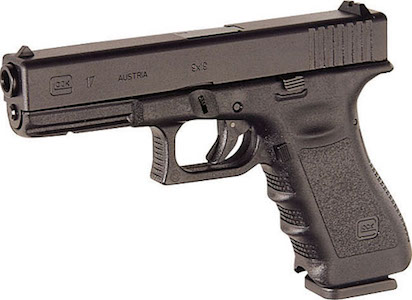
This brings me to the title of this article. Yes, I get that a Glock is a type of gun. I’ve started to read many stories and lost interest when I couldn’t visualise what this style of gun looks like. A writer cannot expect a reader to stop and look up references on Wikipedia in the middle of a story. That’s a fast way to lose readers and many such stories have been filed under DNF by me with mutterings about testosterone when these references are assumed.
Just yesterday, when I wasn’t in the middle of reading a story but was contemplating blog post ideas, I did look up a Glock on Wikipedia. I then gave some thought to how I would describe it in a story and how that description could fit into a scene. The easiest way would be to have a character not too familiar with guns make the observation, but a lone gunman scene would be trickier. That doesn’t mean it can’t be done!
Making assumptions that all readers will share your cultural references is a pit trap that too many authors fall into. One way to avoid it is when you’re writing a scene, try to imagine someone from a very different country or even another planet reading the words and pay special attention to any props that might not be part of everybody’s experience.
Before yesterday I couldn’t have told you whether a Glock had a revolving barrel. Most Brits buy macaroni and cheese in tins. Doc Martins are popular with the Alternative crowd, but my own mother would have asked me what I was talking about, having no idea that it was a brand of shoes and boots.
Try to see through a reader’s eyes, not just your own, and your story might find a resonance with a much broader cross section of society. After all, description is a major part of what a writer does. Explaining your reference to the wider masses opens up your imaginary worlds to a vast spectrum of readers who might enjoy sharing the experience you’re attempting to portray.
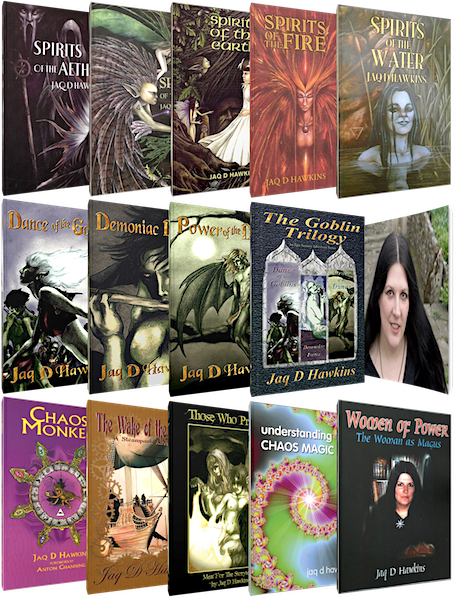
Books available at:
Amazon:
 Chris The Story Reading Ape's Blog
Reblogged this on Don Massenzio's Blog.
LikeLiked by 2 people
Many thanks for reblogging Don 😃
LikeLiked by 2 people
My pleasure.
LikeLiked by 1 person
Thank you from me also. 🙂
LikeLiked by 2 people
You’re welcome.
LikeLiked by 1 person
Great post. In my first book my character used a Glock. I mentioned him turning the safety off and luckily one of my gun toting advance readers told me that Glocks don’t have safeties. I fixed it before publication.
LikeLiked by 2 people
From a reader’s point of view: Thank you for this!
May I add that writers please have their descriptions double-checked. Every so often you read about a Glock being unlocked (no, dear!) or descriptions of sword fights that make it more than obvious this writer never even was near a sword.
LikeLiked by 2 people
Very good point! Any ‘props’ used in a story need to be correct, so if the author doesn’t have personal experience, a little research can save embarrassment.
LikeLiked by 2 people
Definitely good advice! I would have thought the Charleston Chew to be tobacco also. But it’s American? Since I’ve never seen one anywhere in the US I figured it had to be from the UK! It must be a regional thing, maybe a Carolina favorite?
LikeLiked by 2 people
It comes up on The Simpsons a lot. I remember seeing them in California, but I don’t know how regional they might be. Obviously The Simpsons assume everyone will be familiar. I actually enlightened my current partner and his kids by importing some.
LikeLiked by 1 person
Good advice! I wrote a piece of fiction that involved a Glock. Now I think I should go back and put in more description!
LikeLiked by 2 people
Nice post, Ape. It’s lovely to meet Jay D. At least in the USA, even from one region to another things like that can be iffy. I had no idea what a Charleston Chew was. If you hadn’t shown the picture, I would have thought it was tobacco! Proof of the old advice “show, don’t tell.” Hugs all around.
LikeLiked by 2 people
And, of course, brands go bust and get lost, too. In the future many common names will disappear, I set my novel in India and, aware that many readers would not understand some of the words I used, I put a glossary at the back. That way you can avoid possibly clunky descriptions.
LikeLiked by 3 people
I know someone who does that with his Victorian era novels, especially to explain common slang of the period. He actually researched what metal was used for poorer people’s cutlery (flatware for Americans) to keep his descriptions accurate.
LikeLiked by 2 people
Good research – perfect!
LikeLiked by 1 person
Good post. I know what a Glock is but hadn’t heard of a Charleston Chew. I think we often have an understanding of the cultural references from other countries even if we don’t know the details of what they are and how they look. I remember reading books in which Hershey Kisses and Hershey Bars were mentioned. I knew what they were but had visualised them quite differently from reality. On my first and only trip to America I finally came face to face with them.
LikeLiked by 2 people
That’s a lovely post. I’d never encountered Charlestone Chews on my trips to the US, and my first guess at a Glock might have been a watch or bell (glockenspiel!). Fortunately Kindle’s look-up feature often explains these things or less familiar terms, but I’m not sure whether as an author you can check whether it will pick up your own particular references. Then again, we don’t all read books on a Kindle 🙂
Thanks for the tips!
LikeLiked by 3 people