
One of the big mistakes I see writer’s make when I have my reader hat on is making the assumption that everyone who reads your story will automatically recognise references that are familiar to the writer. In reality, with a worldwide audience, many readers may not be able to visualise something you consider common place.
For example, I read a story a few years ago where the writer made a reference to her Doc Martins. I know what Doc Martins are, though a description of the style would have been helpful, but readers who come from a culture other than the ones where this brand name is common might not immediately realise that the writer is talking about a well-fitted pair of boots. It can leave the reader bewildered, wondering what the writer is trying to portray.
This happens frequently with American brand names. Yes, a large percentage of Amazon’s buyers are American. A fairly large percentage of the UK audience will recognise some brand names from television, though it hasn’t been long since I explained to a fellow Brit what a Charleston Chew is.

Many of the brand names common to Americans don’t exist over here and if you want to tell me about a character making a batch of Kraft macaroni and cheese, a paragraph to explain pouring the dried macaroni out of the box into boiling water and opening the packet of cheese powder, adding butter and maybe extra cheese to improve the artificial cheese flavour, I, as a reader, might better understand what your American character is doing in the scene.
I’ve lived in both countries so I know many of the references, but that isn’t true of all your potential readers.
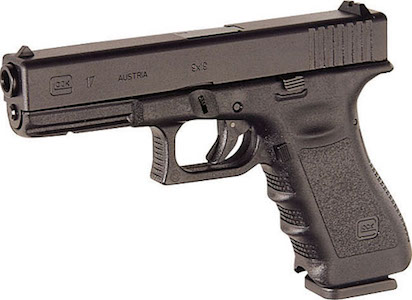
This brings me to the title of this article. Yes, I get that a Glock is a type of gun. I’ve started to read many stories and lost interest when I couldn’t visualise what this style of gun looks like. A writer cannot expect a reader to stop and look up references on Wikipedia in the middle of a story. That’s a fast way to lose readers and many such stories have been filed under DNF by me with mutterings about testosterone when these references are assumed.
Just yesterday, when I wasn’t in the middle of reading a story but was contemplating blog post ideas, I did look up a Glock on Wikipedia. I then gave some thought to how I would describe it in a story and how that description could fit into a scene. The easiest way would be to have a character not too familiar with guns make the observation, but a lone gunman scene would be trickier. That doesn’t mean it can’t be done!
Making assumptions that all readers will share your cultural references is a pit trap that too many authors fall into. One way to avoid it is when you’re writing a scene, try to imagine someone from a very different country or even another planet reading the words and pay special attention to any props that might not be part of everybody’s experience.
Before yesterday I couldn’t have told you whether a Glock had a revolving barrel. Most Brits buy macaroni and cheese in tins. Doc Martins are popular with the Alternative crowd, but my own mother would have asked me what I was talking about, having no idea that it was a brand of shoes and boots.
Try to see through a reader’s eyes, not just your own, and your story might find a resonance with a much broader cross section of society. After all, description is a major part of what a writer does. Explaining your reference to the wider masses opens up your imaginary worlds to a vast spectrum of readers who might enjoy sharing the experience you’re attempting to portray.
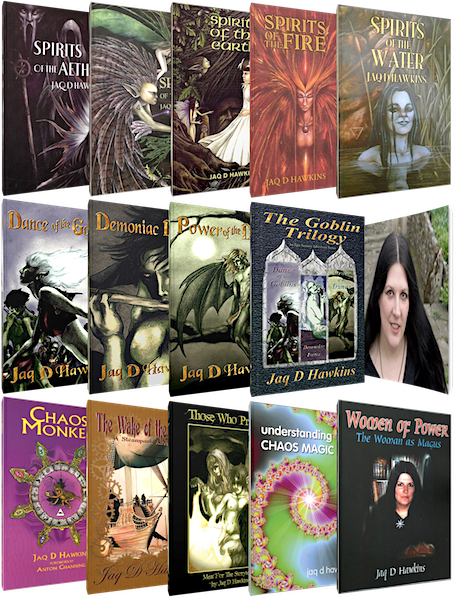
Books available at:
Amazon:
 Chris The Story Reading Ape's Blog
Great article, you see this in hundreds of books & it does make it difficult. I distinctly remember only knowing what something was because I’d watched Breaking Bad the previous day! I read a great article on publishing in different countries. It debated whether publishers should change the names of things for different markets. For example changing sweets to candy or trousers to slacks. It’s hard to determine what to change so it still feels true to the culture without alienating the readers. There’s a great bread roll debate where I live in Northern England are they barms, baps or cobs? All of which would likely go right over the head of someone who’s from London. Calling cigarettes fags isn’t great either!
LikeLiked by 2 people
Having lived in Yorkshire, I can appreciate regional terminology issues! Yet it can be fixed with a sentence that explains in context.
LikeLiked by 1 person
Reblogged this on Smorgasbord – Variety is the spice of life and commented:
A guest post by Jaq D. Hawkins about cultural differences and language. When we first moved to Texas in 1985 I popped into the appartment management offices and asked if I could borrow a rubber, at their shocked look I promised that I would only use once and return almost immediately. Head over to The Story Reading Ape and read the whole of this very interesting article.. and just remember next time you are in the US to ask for an eraser not a rubber!
LikeLiked by 6 people
LOLOL Thanks for sharing AND re-blogging Sally 😀 – HUGS XXX
LikeLiked by 1 person
That’s hilarious! I was reading one of Anne Rice’s vampire novels and read a sentence where Lestat “soiled his pants” (it was the knees of his trousers, in mud) and had to stop to laugh a while before continuing. Slight differences in terms can make so much difference
LikeLiked by 4 people
Love it thanks Jaq.. I also got into trouble at first when I started speaking Spanish when we went to live there.. I think I probably did my share of insulting people but they were very kind.
LikeLiked by 2 people
Reblogged this on TINA FRISCO and commented:
Good advice from Jaq about assumptions writers make that may elude their readers …
LikeLiked by 2 people
Thanks for re-blogging Tina 😀 XXX
LikeLiked by 1 person
So true! And so easily overlooked. Thank you, Jaq. This will help me immensely in the final editing of my new novel. Appreciate your posting, Chris. Shared across my pages 🙂
LikeLiked by 2 people
Excellent blog, Jaq, and perfect points. Iâm not an author, but my husband is, and he is pretty careful in following your points. Incidentally, he has 10 murder mysteries to his credit (Faison Quay Murder Mysteries) as well as some other writings. You might find his website of some interest as well as a recent blog that I put up for him related to his more recent historical/fiction novel âThe Visitorââ¦.at: http://julianhuffer.wixsite.com/mysite4 . His website is: MichaelJamesStewart.com
He doesnât like the marketing side so I act as his Agent (afraid I do a fairly poor job!)
I always receive and read your blog site, so am glad to finally put a name with your site. Thanks and regards, Julian.
Copy of Julian’s signature_edited
LikeLiked by 2 people
Thanks, I sometimes wonder who follows the blog.
LikeLiked by 1 person
Well said!
LikeLiked by 2 people
I had to ask today what shiny vans are. Do you know? They’re shiny slip-on sneakers. Who knew? The old adage for what assume stands for is: “Don’t assume, because it makes an AS- out of U and ME”. -Jennie-
LikeLiked by 2 people
Perfect example. I’m familiar with Vans sneakers, but few Brits are.
LikeLiked by 2 people
I am pretty selective with brand names but it isnt always possible to be multi-continental in thinking of cultural references. I go with a high percentage word or phrase.
Sometimes they can actually cross the barrier and be helpful.
LikeLiked by 1 person
I have pretty much stopped with brand names. As you point out they can be confusing and require a lot of explanation. I can imagine a story where a mother feels badly about making a box dinner of mac and cheese. Why is the name necessary. “Adding the uncooked macaroni to the boiling water is not so bad but then tearing open and adding a little packet of phony cheese flavored powder always makes her eyes overflow.” (That is the important stuff, not the name)
LikeLiked by 3 people
Yes, I agree. I’m more likely to describe the product than to identify a brand in most situations. My goblins aren’t brand conscious anyway and look at human objects from an alien perspective normally. 😉
LikeLiked by 2 people
Thanks. 🙂
LikeLiked by 1 person
A great article and very relevant. A glock in German is a bell. My children´s surname is Glock, so that one word could have a number of meanings! (as do many words) As writers, we need to keep this in mind.
LikeLiked by 2 people
*Whisper* bell in German is Glocke. Your childrens’ name lost the “e” somewhere on the way 😉
LikeLiked by 2 people
This is true.
LikeLiked by 1 person