
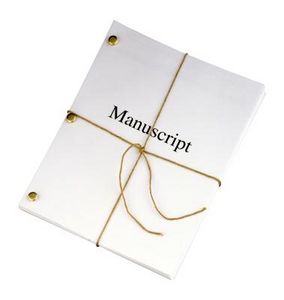
If you’re serious about being traditionally published you will need an agent. The majority of publishers don’t accept unsolicited manuscripts, so finding someone to represent you and your work is essential for getting that elusive book deal. I’ve been down the submission path myself (and have the pile of rejection letters to prove it). As it turned out, I wasn’t ready at the time, and neither was my book, but I didn’t let it get me down (too much). Instead, I went online, joined a writing forum, read as much as I could, attended a seminar and gave my book to several more people to read. And I learnt a lot, both about the type of book I was writing and about how to submit to agents. So I thought I’d share it with you.
- Stick to the guidelines. Now, this may seem pretty basic stuff, but it is so important to give an agent exactly what they specify in their submission guidelines. Usually they ask for a synopsis (try to keep it to one page or less), a cover letter, and the first 50 pages or three chapters of your work. Don’t send extra because you think they might like it, don’t write a synopsis that’s longer than your first chapter and make sure you format the document exactly as requested. Double space or one and a half space is standard. Don’t give them any reason to dismiss your submission before looking at it.
- Presentation. Check your spelling, check your grammar, check your line spacing and paragraphs, then check them again. Number the pages on your manuscript and add your name and book title as a header or footer – that way if pages get misplaced or mixed up they can be put back in the right place. And no sparkly bows or complex folders or novelty paper clips – this is a professional document and should be presented as such if you want to be taken seriously.
- Sell yourself. This is very important. Your cover letter should give the agent some idea of your writing experience, summarise your book and position it in the market. It should also be concise and the tone professional. You probably won’t get too far with ‘Well, I showed it to my mum and she seemed to like it, so I thought I’d send it to you.’ Though at the same time, you also should probably also avoid being all ‘Hey b*tches, I’ve just written the next Harry Potter! Bow down and let the bidding war begin!’
- Research your agents. Don’t adopt a shotgun approach and send your work to all and sundry. It’s a waste of time for you and everyone else. Instead look for agents who represent work in your genre, maybe read some of the authors on their list (a visit to the local library is the best way to do this) and target your cover letter individually for each agent, rather than doing the old cut and paste. A visit to most literary agency websites will give you an idea of the best person to whom to direct your submission, or a quick phone call can also be helpful.
- Make sure your work is ready. Don’t submit if you haven’t finished your work. Imagine if an agent calls you wanting the full manuscript and all you can say is ‘it’s not done.’ Believe me, they will move onto the next thing. The exception would be certain types of non-fiction books whereby you submit a proposal before starting the work.
- Do not harass. Most agents will state on their websites that a certain period of time is needed to look at your work. When you consider that they receive up to fifty submissions per week on top of managing their existing clients, you can see that ringing them up every day to see if they’ve read your work is not the best way to stand out. Observe the waiting period – most will get back to you, some won’t, but all you can do it wait. Learn to meditate, start a hobby, write a blog (ha!) or mark the days with a big ‘x’ on your calendar.
So there it is. All that I’ve learnt so far about the submission process. It probably isn’t everything you need to know, but I hope it helps, and remember, there are exceptions to every rule. And now I’m getting ready to start the process again with a new book and a new list of agents. Fingers crossed!

Helen Jones is a writer and blogger whose first novel, Oak and Mist, is now available on Amazon. Her second book, No Quarter, is due out in August 2015. She blogs at journeytoambeth.com, is on Facebook and tweets very occasionally HERE.
 Chris The Story Reading Ape's Blog
Very informative post, Helen. Thank you so much. Shared 🙂
LikeLiked by 1 person
Thanks Tina 😀
LikeLiked by 1 person
Good luck with the search Helen! Is this a completely new book, or one from your Journey to ambeth series?
LikeLiked by 1 person
Thanks Ali! This is a new book unrelated to Ambeth, so quite exciting 🙂
LikeLiked by 2 people
Ooooh… A new project! Exciting! All the best with it!
LikeLiked by 2 people
“Your cover letter should give the agent some idea of your writing experience, summarise your book and position it in the market.”
Check! I bounced my blurb to a small publisher. The whole story in about 100 words. I centred the theme on a principle value, and the exploration of that value through different situations arising in the life of one person and the milieu around that person. This forms my message, and my reason to write the story. The story is set in a mythical medieval period on a place similar to earth. It is a first book, a stand alone story, and it introduces key characters to develop in a much larger story later. Genre, as far as I can tell, is historical medieval fantasy. Maybe the word “epic” is fashionable?
As to who would buy it and read it, I haven’t one clue. I would; that’s why I am writing it. But I haven’t a demographic in mind that would be useful for positioning the book on the market. I would stock it on a shelf by genre but that is not helpful in marketing it. I know the unique selling point. I just have no idea to whom it appeals.
What do you mean by “position”?
LikeLiked by 1 person
When you position your book, you’re giving the agent or publisher some idea of who they can pitch the story to, which is vital if you want them to take you on. I think you can look at positioning in several ways, either by language (so if your book is humorous fantasy you could say ‘would appeal to fans of Terry Pratchett or Douglas Adams), by specific genre (your book is high fantasy, so you could say ‘would appeal to fans of Terry Brooks’) or by target audience (the book is targeted at young adults). It’s not comparing your work to someone else’s, it’s simply saying that your book would appeal to fans of that work. When you approach an agent or publisher, you are selling your story, so you do need to understand the market you’re selling into. I would imagine any agent or publisher you approach would already represent or publish authors in your genre, so it’s worth reading some of those books and seeing if your own story would appeal to the same audience – if you can show an agent that you’re familiar with who they represent, and that is why you’re approaching them, then you show that you have done your research and are not just sending your work to all and sundry.
Hope that helps a little 🙂 Good luck with the submission process.
LikeLiked by 1 person
Hi. And thanks again for your prompt replies here and via Twitter. Do I have everything I need regarding position in my description above? I do not want to over classify my craft like the music industry does with music.
LikeLiked by 1 person
You’re very welcome 🙂 As to your blurb above, it seems to have all the necessary elements except for your target audience. I do understand the idea of a story having universal appeal, as my current book, even though it’s technically YA, is being read by people of all ages. However, if I were to submit it to an agent or publisher I would classify it as YA fantasy. So that would be the only thing I’d recommend adding – to pick a target audience using one of the comparison methods above, with the understanding that it doesn’t mean your book is limited to that group only. I hope that helps – I’m certainly not an expert, however I do know that this can help your chances of having your work read. It’s also part of personalising your cover letters – understanding the type of books each agent or publisher represents, so you can put your book in a similar category. Good luck.
LikeLiked by 1 person
The little experience I have with the Young Adult category is Rosemary Sutcliff and Michael Morpurgo. I imagine myself more aligned to Dashiell Hammett in terms of my adult themes: sex, drugs and rock’n roll – but tastefully so, fade to black. But that stuff is in there as it should be in any contemporary setting where a realistic portrayal of morality is attempted. Not sure my target is Young Adult but my novel does have fairies and (low) magic, which I gather is the criteria for that segment. In this way I assume George Martin’s A Song of Ice and Fire Saga is “Young Adult.” (Take out the gratuitous descriptions of the mundane and that’s as close a comparison as I can/dare muster.)
Should I stipulate “Young Adult” then? What other demographic phrasing exists in publishing for my work? Aside from YA, does the publishing industry (like the music industry) have a standard list of marketing phraseology to which I can cling. I get the mental picture of a young adult as 11, in part because I am a parent and because of my marketing background (non-publishing).
LikeLiked by 1 person
Your themes might make it more New Adult, which is for a slightly older audience. It might be worth Googling fantasy genres to see which one fits your story best. For me, A Song of Ice and Fire would be high fantasy – I think it a bit too intense and graphic for YA (though again, it does appeal to a large age range). Just because you have magic and fairies doesn’t necessarily mean it’s YA. You might be better to position yourself against some specific titles and authors – perhaps you have some you like, or you could approach agents who represent fantasy authors you enjoy – then you have a frame of reference.
LikeLike
That should read “mental picture of a young adult as younger than 19 but older than 11,” but since I used lesser than and greater than signs, it disappeared from sight. My apologies.
LikeLiked by 1 person
My uninformed fear, and this may be irrational as well so do not hesitate to tell me if it is so, is that a publisher might/would not want to publish more than one [name an author here] within their contemporary line up. In my mind approaching Bantam with the line “story similar to A Song of Ice And Fire” would be like selling snow to the Eskimos. I can see the logic to it, of course, from the perspective of an apple seller not wanting to sell oranges. However, it is contrary (or, at least, not a consideration) to the reason why I wish to write and be read. What are your thoughts? Is there any merit to my fears or are they just a barrier to me? Maybe Bantam would welcome another George Martin (pre-George Martin fame)? The idea befuddles me.
LikeLiked by 1 person
You may be over-thinking the process a little – all you need to do is let your prospective agent or publisher know which audience your book might appeal to. That way they will know whether it will suit their list. Of course, you’ll already have researched their likes and dislikes so you’ll be able to position yourself against other authors in their list ie ‘I see you represent x, this may appeal to a similar audience.’ I know that the cover letter can be a stressful part of the submission process, but I was told by an agent not to stress too much about it, just to concentrate on my writing.
You’ve raised some interesting concerns about the process though – would anyone else care to weigh in with their own experiences?
LikeLike
Thank you Chris for posting. Thank you, Helen, for sharing your experiences with other authors. I went that road once without much success but I may try again with publishers too.
LikeLiked by 2 people
Interesting post. It seems I rarely read traditionally published books since I discovered self-published.
LikeLiked by 4 people
That’ll be good news for Indies Michelle 😀
LikeLiked by 1 person
Reblogged this on CKBooks Publishing and commented:
I tend to write and share posts about self-publishing because I think that it makes sense for most writers to go that direction, and for a myriad reason. But what I suggest to any of my clients or writers I am talking to who want to go the traditional route is to do both: self-publish and try and get a traditional publisher. It used to be that you couldn’t do both, but that is not the case any longer. The better you do as a self-published author, the more likely you will be picked up by a traditional house.
Of course, there is no reason at all that you can’t just go for traditional publishing but be prepared for a lot of work and a long, long wait. Of course, there are always rare exceptions to this, but this is the norm. That’s just one reason I suggest, while you’re working on getting traditionally published, self-publish and start building a fan base. It can only help!
Thanks to Chris (from Reading Ape’s blog) and Helen Jones for the post.
LikeLiked by 2 people
Thank YOU for reblogging it Christine 😃
LikeLike
It might sound impossible, but problems #1 and #2 are the most common of all. Have yet to encounter an agent that doesn’t have the majority of the submission failing because of #1 and #2.
LikeLiked by 2 people
Reblogged this on Anita & Jaye Dawes.
LikeLiked by 2 people
Thanks for sharing Anita & Jaye 😀
LikeLike
Thanks Chris! xx
LikeLiked by 1 person
Welcome Helen – Call again with more great articles any time 😀 xxx
LikeLiked by 1 person