
Around this time last year, I wrote a post about new beginnings and the art of starting a new story.
One of the important elements of beginning a story is giving the reader visual references that help them imagine what the main character, and perhaps a few other significant characters, look like, and this often includes some mention of how they dress.
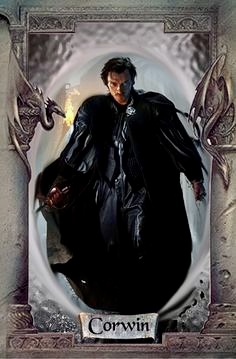 One of the features of a lot of early Fantasy novels is a tendency for the characters to dress in dramatic ways. For example, in The Chronicles of Amber by Roger Zelazny, the members of the ruling family each have their colours and signature outfits. The main Character, Corwin, wears black and silver with a rose motif.
This is artfully worked into the story, after Corwin wakes up in a hospital and we presume he’s in a hospital gown, especially after he asks an orderly where his clothes are and ends up mugging the orderly for his uniform when he refuses to tell. Later in the story, his signature outfit appears in the back of a car,
“I reached into the back seat, where my shoes had become black boots, and something rattled as my hand groped after them. I drew forth a moderately heavy silver sword and scabbard. The scabbard fit my belt perfectly. There was also a black cloak, with a clasp like a silver rose.”
This outfit is described at least twice more, but always in context of a sort of individual uniform, specific to the character’s background and family association.
It has become cliché in many Fantasy books through the decades, with first chapters too often suffering from info dumps that begin with the words, “He wore…”
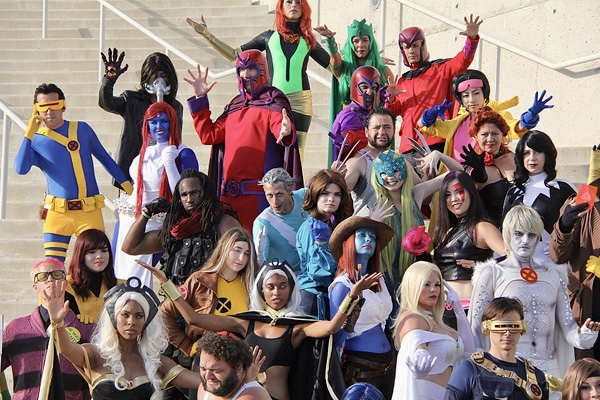 We refer to this as a laundry list. There’s a bit of mental cosplay involved in dressing up these striking characters with their billowing cloaks and stylish boots, yet to a lesser extent, the sartorial choices of characters in other genres are just as important as clues to their personalities and how they present themselves to the world in which they are depicted.
A Victorian character, for example, can be just as concerned with his (or her) wardrobe as the Fantasy prince, and we all know the private investigator absolutely must have either a trench coat or in more modern novels, perhaps a duster jacket.
Then of course there’s the man in a suit, which seems popular in some Romance and Women’s Fiction, or the Barbarian in a fur vest, depicting a proud warrior.
There is a school of thought that says we shouldn’t give too many details of description about characters, as it makes it harder for the reader to project themselves mentally as that character. Hair and eye colour, for example, locks that visual reference onto the character and someone who doesn’t have the same attributes might find it more difficult to identify with the character.
However, clothing can give clues to the nature of the person we’re writing about and the choices they’ve made for their lives or where they fit into the society depicted in the story. A woman in a flowing, flowered dress comes across very differently than one in a power suit with shoulder pads.
The trouble is, how do you get across the description of a character’s clothing without the proverbial laundry list of info dumping fame?
Working it into relevant scenes is the most easily workable. For example, in my own current work in progress, my main character is traversing a mountain range known as the Crystal Mountains, and her choice of clothing becomes relevant to the task, keeping in mind the mountains are riddled with dragons and moving unseen is a very good idea.
 “There was no path, as humans had avoided the Crystal Mountains for hundreds of years. The incline, however, was not overly steep. Lesana had worn good leather hiking boots and her rough linen tunic and breeches would retain warmth as well as protect against the sometimes sharp edges of the quartz boulders that gave the mountain range its name. Lesana noted that the natural colour of the undyed fabric faded into the milky quartz crystals, providing the best camouflage she could hope for in this terrain.”
The key here is relevance. A prince wearing the family colours and crest might be described when he’s holding court and his presentation becomes symbolic of his position, or a peasant might be embarrassed by dirt on his rough tunic that had seen better days and had worn thin.
Saving the description for a relevant moment works it into the story, rather than listing garments on page one without context.
Outside of Fantasy, clothing choices can be very symbolic, expressing some aspect of a character who makes those choices. The aforementioned suit, a leather jacket, faded jeans, or any number of articles say something about the person who chose to wear them, even sometimes bringing out a different side to a character, like a teacher who dresses formally at school, but comes across a student on a weekend while wearing casual clothes. Suddenly he seems more human, rather than just the embodiment of the role he plays at work.
Some stories don’t describe character’s clothing at all, but leave it to the reader’s imagination to dress them according to their own impressions of what that character would be likely to wear, or just the main character might have such a description worked in while the side characters are left to the mind’s eye.
How much description of character clothing do you tend to write in? Are your characters modern and in the real world, or do you write in fantastical worlds where a bit of dress-up is frequently important to the visuals? Let’s chat in the comments.

Jaq D Hawkins
Books available at:
Amazon:
 Chris The Story Reading Ape's Blog
I agree about the value of mentioning characters’ clothes. Actually I’ve done a few posts on it too. Hugs.
LikeLiked by 1 person
I favour mentioning characters’ clothing only if necessary, but I’ve read quite a few books in which the narrative freezes (even in action scenes) for a description of someone’s outfit. I think some readers actually like those detailed descriptions, judging by reviews and ratings.
LikeLiked by 2 people
I’ve seen it done well, without stopping the action, and have tried to do the same when it was relevant in my own stories.
LikeLiked by 2 people