
 The obvious answer is your characters come from whatever place serves as the setting for your story, but that’s not what I mean.
The real question is, where do the personalities of your characters come from? There is a general assumption that a part of the author’s personality transfers to the hero or heroine of the story, but is that always the case? What about the villain? And what if you write disturbing fiction, like extreme Horror?
These questions came to my mind while reading one of Stephen King’s books, Rose Madder. I’ve heard King is a thoroughly nice guy. I’ve seen enough of his social media posts to have an impression of the sort of confidence that comes with success. However, the two most important characters in this book are a timid abuse victim and her abusive husband, who is a seriously nasty piece of work. How do such characters develop from the mind of a writer who wouldn’t fit either of these personalities?
Apart from these questions, the supporting characters each have unique personalities of their own. A good writer can create distinctive personalities for a cast of characters who can’t possibly come from the same blueprint.
One telltale sign is an aspect of the villain’s personality in this particular story. He has a knack for getting inside the thinking processes of his target, especially his wife, whom he knows well. To find her, he follows her trail by thinking like her, doing the things she would do, making choices she would make.
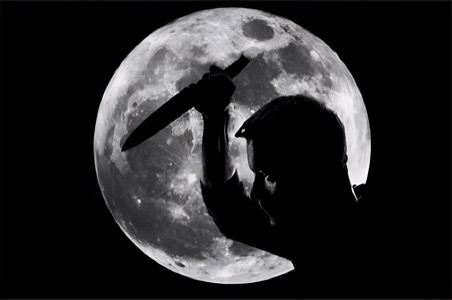 This is, perhaps, how a writer can depict a personality very different from themselves, by projecting personality traits not their own. Perhaps it’s even the part of King that contributed to this particular character, or even the inspiration for aspects of the character’s personality.
This is all speculation of course. I’ve never met Stephen King or read anything about his process for creating these characters, but as a writer I can see this as a plausible explanation for how these diverse characters come to be.
A good story has to have a variety of personalities depicted in different characters, but where do they come from within our minds?
A psychologist would probably surmise that we get ideas about personalities from the people we meet throughout our lives, though I would extend that to people we learn about through television and other media. The news gives us a spectrum of personalities to observe, including extremely toxic ones in the case of violent criminals.
Some ideas come from life experience. One of the aspects of King’s story is that the abused wife can’t go to the police because her husband is a policeman himself, and there is a certain brotherhood among law enforcement and some other professions to look out for their own.
Let me point out that I’ve known some really nice cops and seen stories about those who go out of their way to make someone’s life better, but these don’t get the press the Bad eggs do.
In real life, there are boundaries that if crossed would not be covered up by others in profession brotherhoods, but the character doesn’t have the confidence to trust to that. Where is the line drawn? We’ve all seen news stories about cover-ups from cops to clergy. In a fictional story of this nature, we have to assume the worst scenario is very possible. It works as a story device in Rose Madder because it cuts the abused wife off from the otherwise obvious source of protection.
 The question extends to all genres. Where do we concoct a personality for a possible lover in a Romance story? For a clever investigator in a Mystery? For a ruler in a Fantasy novel who might be benevolent or a despot?
I can only speak for myself on this. When I look at my own characters across my various stories, there always seems to be one who is calm and analytical. That’s a projection of my own natural disposition and easy for me to spot. In Dance of the Goblins, the main human character, Count Anton, was inspired by someone I knew who had a fun personality, but was very intelligent. However, some of my own traits modified the character’s personality.
Haghuf, the main goblin, is the one I would identify with most. Calm in a crisis, caretaker of the sacred books, sarcastic sense of humour that makes him wind up Count Anton at every opportunity; “But what do goblins eat?” “Whatever comes to us.”
Haghuf likes to be left alone and to study the arcane. The main difference between us is that he’s vegetarian. Very different from Talla, a significant female goblin character. She’s an example of how world building can form a character. Talla is adventurous and fairly fearless, mostly as a result of having ways of defending herself that range from a magical glamour to nasty sharp claws.
Goblin society allows for female independence, as there is a shortage of females, so they call the shots for optimum mating. They don’t generally pair up, but breed with all the romanticism of feral cats. Talla isn’t bad, she’s just a product of biological necessity.
So where did I get Latham? Latham is a nasty piece of work, put together from observed bigotry, selfishness and narrow-mindedness that is far too common among our species. He isn’t inspired by any one person, but watch a really inane Internet argument and you’ll see his mentality.
One could speculate that fairytale villains reflect hidden aspects of ourselves. Isn’t there an evil queen like Malificent lurking in the psyche of all of us? Or is that just me…
How about you? When you look at some of your main characters, can you pick out traits that came from specific sources? Let’s compare notes.
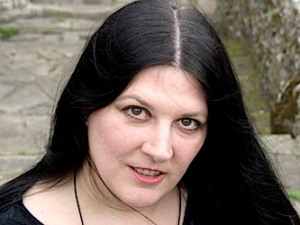
Jaq D Hawkins
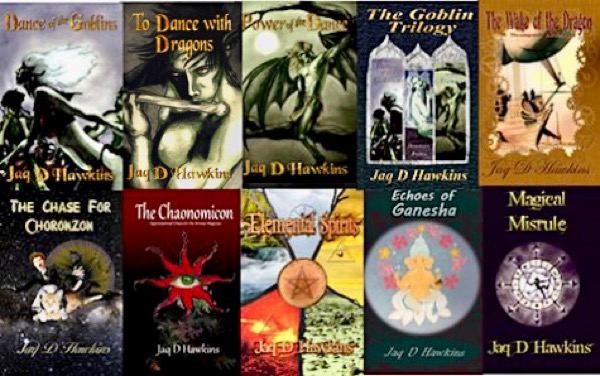
Books available at:
Amazon:
 Chris The Story Reading Ape's Blog
This sounds fun! Anytime a character does something other than what’s expected, it adds interest to the story.
Sometimes I’ll think about what the obvious thing to happen is and intentionally do something else for this reason.
LikeLiked by 1 person
Like Mike van Horn, sometimes characters emerge during action. In one of my books (actually, my first), the company have to fight and aggressive pack of wolves, led by a pair of dire wolves.
After the fight, the characters go to wash the blood from them, girls first. When it comes to the men’s turn, a young lad refuses to go. Eventually he is persuaded to tell them he’s actually a girl, posing as a boy so as not to be sent to the local brothel.
I knew nothing of this when I started writing, and created the character.
Other times, a character pops into my head. Maybe a name, maybe a physical description, or perhaps a characteristic.
Then there are those who are needed for the plot.
I find it to be a mysterious thing.
LikeLiked by 2 people
I get similar surprises from my characters. The plot draws out these complications. I can see how a simple bathing scene becomes a lot more interesting with this character’s secret exposed.
LikeLiked by 2 people
My characters sometimes invent themselves in the midst of action. For example, in one of my sci fi stories, humans have been tricked into going to an alien world with promises of wonderful things, but it’s actually a hunting world where they are tracked down, killed, and eaten for sport by various kinds of aliens.
One woman is running away and has almost escaped her pursuer when she trips and falls, He catches up to her, holding his long knife. She prepares to die as he stands over her. Then, instead of killing her, he cuts off a lock of her hair as a trophy, then hands her a packet of food and a stiletto. He becomes her guardian.
This just emerged as I was writing it. After that, this alien has appeared in several of my other stories, including aliens coming to Earth as tourists and shopping in Beverly Hills. He bought a deerskin vest.
LikeLiked by 2 people