
Continuing our ongoing series of long sentences in literature, (see Steinbeck & Twain and Elmore Leonard) I present three first sentences from well-known books.
 “I was born in the Year 1632, in the City of York, of a good Family, tho’ not of that Country, my Father being a Foreigner of Bremen, who settled first at Hull; He got a good Estate by Merchandise, and leaving off his Trade, lived afterward at York, from whence he had married my Mother, whose Relations were named Robinson, a very good Family in that Country, and from whom I was called Robinson Kreutznaer; but by the usual Corruption of Words in England, we are now called, nay we call our selves, and write our Name Crusoe, and so my Companions always call’d me.”—Daniel Defoe, Robinson Crusoe
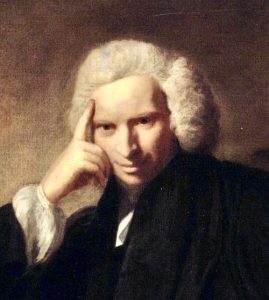 “I wish either my father or my mother, or indeed both of them, as they were in duty both equally bound to it, had minded what they were about when they begot me; had they duly considered how much depended upon what they were then doing;—that not only the production of a rational Being was concerned in it, but that possibly the happy formation and temperature of his body, perhaps his genius and the very cast of his mind;—and, for aught they knew to the contrary, even the fortunes of his whole house might take their turn from the humours and dispositions which were then uppermost:—Had they duly weighed and considered all this, and proceeded accordingly,—I am verily persuaded I should have made a quite different figure in the world, from that, in which the reader is likely to see me.”—Laurence Sterne, Tristram Shandy
 “I, Tiberius Claudius Drusus Nero Germanicus This-that-and-the-other (for I shall not trouble you yet with all my titles) who was once, and not so long ago either, known to my friends and relatives and associates as “Claudius the Idiot,” or “That Claudius,” or “Claudius the Stammerer,” or “Clau-Clau-Claudius” or at best as “Poor Uncle Claudius,” am now about to write this strange history of my life; starting from my earliest childhood and continuing year by year until I reach the fateful point of change where, some eight years ago, at the age of fifty-one, I suddenly found myself caught in what I may call the “golden predicament” from which I have never since become disentangled.”—Robert Graves, I, Claudius
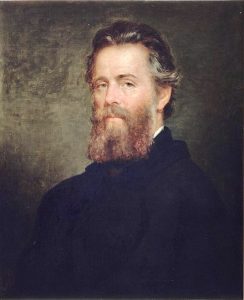 And … just for the fun of it, let’s go in the opposite direction with probably the most famous first sentence in the English language:
“Call me Ishmael,” Herman Melville, Moby Dick

Andrew Joyce Website

Amazon:
USA – UK – Canada – Australia
 Chris The Story Reading Ape's Blog
I enjoyed these, Andrew. I would think when the author read his completed sentence he just might think maybe a period or two is needed. Thanks for hosting Andrew, Chris.
LikeLiked by 1 person
What works, works. Break the rules when it feels right. Melville made it work short. Long may usually not be right, but . . . Fun reading!
LikeLiked by 1 person
I was going to say these were written in the golden age of literature when sentence length did not matter, but I, Claudius was written in 1934, so that comparison doesn’t hold, but still it seems these authors find writing long sentences a way to set the tone for their books.
LikeLiked by 1 person
Reblogged this on https:/BOOKS.ESLARN-NET.DE.
LikeLiked by 1 person
Jane Austen, too, had many long sentences. Some well over 100 words.
But fashions in writing change over time. One sentence, in Jane Austen’s Persuasion, went something like this (I can’t quote exactly, as I don’t have the book. It was loaned me by a friend): ‘The carriage was about to be waited for.’
She used passive voice all over–a thing we are told not to do.
People in the past had more time, and greater concentration than today. Now we want everything quick and lots of white space on the page to help us get through it. Long passages of writing put modern readers off, so I am told.
LikeLiked by 3 people
I think if the sentence is well crafted and beautifully written, even us “modern readers” can appreciate it.
LikeLiked by 1 person
I’ve always been amazed by the wild length of run-on sentences in old or classic literature. I’m with Melville. Hugs.
LikeLiked by 3 people
Yeah, Melville got to the point. You know Moby Dick was a flop when it was first published. It didn’t catch on until the 1920s when it was reissued.
LikeLiked by 2 people
I reckon you can called Steinbeck classic, but Elmore Leonard is still contemporary and he could write great long sentences.
LikeLiked by 1 person
Ah yes, I well remember hearing the I Claudius statement for the first time and smiling! One of my favorite box sets. Perhaps I shall dust it off and load the DVD player. 🙂
LikeLiked by 3 people
When you’re done with the watching it, I’d like to borrow the DVD.
LikeLiked by 2 people