
Wake Up and Smell the Coffee

I’m old-fashioned in a lot of ways. I could list twenty different qualities that put me into the senior box instead of the middle-age category. One of the ways people show their age is through their use of language. If you’re like me, then perhaps you speak with idioms. I don’t purposely plan on saying them, but that’s what comes out of my mouth. As I’m going over my first novel with my critique group, these critters sometimes slip into my writing. It’s not an issue if grandma or grandpa occasionally tosses one in but not if your protagonist is twelve.
Idioms are not a problem as long as your characters don’t use too many clichés. You can get more bang for your buck that way. Oh, stop it! I was just pulling your leg, or was it your chain? If you fall in love with those phrases, you’ll end up with egg on your face. Come on, Springer. It would help if you thought outside the box. (As opposed to thinking in a box?) Please don’t get me sidetracked! I was starting to get the ball rolling. Bear with me because I’m about to turn over a new leaf. While you’re at it, don’t have a cow! That’s just the way the cookie crumbles.
I’m thinking a lot about words as I go over my middle school novel. Using the right diction is important in any dialogue. Since most of my characters are middle schoolers, they can’t sound like my grandparents uttering phrases like “the grass is always greener” or “slow as molasses.” Do kids even know what the hell molasses are?
The opposite is also true. If you want your teenage kid to roll his eyes, make fun of you, or go into hysterics, throw in a few teen slang phrases such as, “Sup, bruh? Your bae is straight fire! No cap!” Because I’m a slick hipster, I’ll translate that for you—“What’s happening, brother? Your girlfriend/boyfriend is hot. I’m not lying.” If you think you’re going to impress teenagers with your use of modern vernacular, you’re wrong. They will think you are a fish out of water.
When I was teaching fifth and sixth grade, the kids and I helped each other out all the time. For every “let’s get back to the drawing board,” I threw at them, they taught me that something sic/sick was really cool. Each time I told them to “call it a day,” they educated me that “keeping it 100” meant to be honest or straight with them.
The beauty of words is they are ever-changing. For those who can’t wrap their head around that, all I can say is get with the program. When your thirteen-year-old throws out a slang phrase that you’re not familiar with, there’s a 50% chance it means the opposite of what the word used to mean. Stick with me, kid. I’ll keep you out of hot water.
About Me
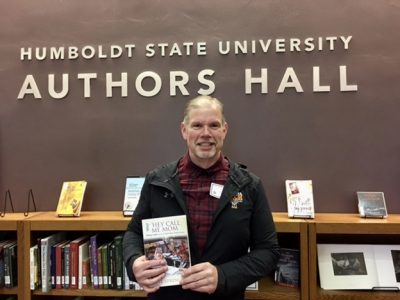
My given name is Peter Springer, but my friends call me Pete. I taught elementary school (grades 2-6) for thirty-one years and loved everything about being a teacher. I especially liked being around kids. While I was teaching, my favorite daily activity was to read to children. Not only did I get a chance to be a big ham, more importantly, I also got the opportunity to turn my students on to favorite books, series, authors, and genres.
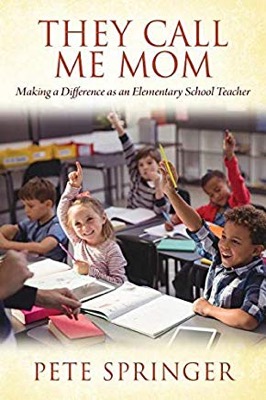
While I was teaching, I thought about writing books for children when I retired. That ship is now in the harbor. Before that, I got sidetracked with another project. I decided to write a book about my life as a teacher called They Call Me Mom: Making a Difference as an Elementary School Teacher. It is what I would call a combination memoir/advice book. Blessed with fabulous role models, I felt a sense of duty to pass on what I’d learned about teaching and children to the next generation of teachers.
Since retiring, I’ve looked for ways to promote literacy. I became part of the Humboldt County Children’s Author Festival Committee. This is a fantastic group that helps bring twenty-five nationally known children’s authors to our area biennially. I’m the lone male on the committee of thirty dedicated volunteers. (There are worse things in life than hanging out with a bunch of great ladies.) While the authors are here for four days, we bring them around to local schools to talk to children about writing, the life of an author, and their books. There is nothing quite like the instant a child’s eyes light up as they listen to a presenter. It’s like that moment when a child decides, “I could do that.”
Now, I’m following my dream and hoping to write books for the middle grades. That is such an impressionable age and right in my wheelhouse. I’m going over my first novel right now with my critique group. Retirement is a blast!
Blog – Facebook – Twitter
 Amazon:
USA – UK – CA – AUS – IN
 Chris The Story Reading Ape's Blog
A great post, Pete, it gave me a good laugh. I took notes in the vain hope it might help me understand my younger son, I’ve definitely heard some of these expressions.
LikeLiked by 2 people
Haha! It’s hard to realize that we’re speaking the same language sometimes.
LikeLiked by 2 people
What a wonderful posting, and how terrible is this kids slang today. Never thought how important that is for writing. Michael
LikeLiked by 2 people
English is a tough enough language to learn for native English speakers. I’m sure slang phrases are especially challenging for non-native English learners.
LikeLiked by 2 people
That true, Pete! Knowin some youngsters from London, i always have to ask twice about the meaning of their shorten messages. This only in written conversation. How horrible would it be in direct conversation?
LikeLiked by 2 people
Wonderful post, Pete and Chris. I never thought about how tough it would be to write a middle-school book with all the weird and wonderful vernacular. If anyone can do it, it’s you 🙂
LikeLiked by 2 people
I think nailing the right tone is a challenge for any writer. You know your audience as a writer of romance novels.
LikeLiked by 2 people
What a wonderful interview with Pete. He had me chuckling over all his idioms. 🙂
LikeLiked by 2 people
Thanks, Jan. Every dog has his day. 😎
LikeLiked by 2 people
Great post, Pete, thanks. I have no idea how old I sound. Probably older than I should. Maybe I should write for old folks instead 🙂
LikeLiked by 1 person
I think part of the fun of writing for me is to try and write for different audiences. At the same time, the dialogue can’t be stilted. That’s why I need to check with young people to make certain the language comes across as natural.
LikeLiked by 1 person
Pete’s great
LikeLiked by 2 people
Right back at you, Beth!
LikeLiked by 2 people
Fascinating post, Pete… but I cannot get my head around all this new talk. Some of it is fun, the rest just confusing!
LikeLiked by 2 people
That’s part of their strategy to keep us in the dark.
LikeLiked by 2 people
How cool are you, knowing all the teen slang, lol!
LikeLiked by 3 people
Ha! I can see my son rolling his eyes right now. 🤣
LikeLiked by 2 people
Great points and all so true!
LikeLiked by 2 people
Thanks, Becky. I’d like to think this old dog can learn some new tricks.
LikeLiked by 2 people
I’m sure!
LikeLiked by 2 people
Thank you so much for your support, Chris. Inexperienced bloggers, such as myself, gain so much knowledge from your blog.
LikeLiked by 3 people
My pleasure, Pete 👍😃
LikeLiked by 1 person