

World-building is an important part of any writer’s preparation, and the speculative genres offer some wildly fun opportunities. There are no boundaries. The imagination is unleashed. The setting of the story can be as “fantastic” as the writer desires.
But fantastic also has to be relatable and plausible.
Relatability is a must when it comes to the main character(s). If a reader can’t relate on some emotional level to the protagonist, a book is going to struggle. Why do I mention this with world-building? Because in speculative fiction some or all of the characters may not be human.
There are no limits to alien design from physical features to intelligence to social and cultural norms, and writers can stretch those limits to create some unusual encounters and conflicts. Aliens that completely baffle us are fine, but rarely are they protagonist(s). The main character(s) needs to possess some “human” emotional content that the reader can identify with.
With setting, relatability is a little different. Pushing the limits can create some wonderfully strange and interesting worlds, but for every stretch, the writer needs to ensure that the audience understands what it is they are reading.
Making up or renaming every plant, animal, weapon, and food item on a planet might be realistic, but even with an appendix, it would create an unreadable book. A similar challenge presents itself with altering units of time and distance. The planet Klaspo would likely measure time differently than we do on Earth. And though an author can “explain” the difference, there’s danger in requiring a reader to stop reading and convert Klaspo time-spans into relatable Earth hours/years. We want the reader immersed, not doing math!
It comes down to a question of what’s relevant. The fine line between fantastical and relatable is rather blurry and thoroughly book-dependent. A key to world-building is to elaborate on and integrate those complex imaginary elements that relate directly to the characters and plot, and then sprinkle in all the other details that embellish the unique nature of the place but require little explanation.
Plausibility follows many of the same rules in speculative fiction as it does in other fiction genres: human characters have to act like humans for the most part, and the writer has to have a good reason why a car never runs out of gas, the bullets never miss, and the woman who just survived the zombie apocalypse has perfect makeup and hair. Right?
Plausibility in world-building has everything to do with the integration of its major systems. On Earth, a community/region/nation is made up of a web of forces impacted by its geography, resources, history, political systems, alliances and enemies, cultural norms and values, technological capabilities, economies, and religions. In speculative fiction, the worlds work the same way, and authors may add techno-magic into the mix.
Writers not only build each system with its features, benefits, and flaws, but all systems need to integrate in order to maintain crucial consistency. For example, a technologically advanced society would likely employ technology across a broad array of systems, and if not, there needs to be a reason why.
These major systems push and pull on each other until they reach a level of temporary stability. When a change occurs in one system, it ripples across all the others. Conflicts, power-struggles, and sudden changes are destabilizing, and just like in the real world, the disruptions can lead to broad-reaching chaos. That chaos will serve some, harm others, and leave the world altered as new stability is achieved.
At the start of a writing project that involves world-building, it’s a good idea to write a detailed description of your world, touching on each of the major systems. Creating deep and complex worlds will add to the realism and intensity of your story.
Not every detail of the world you create will end up in print. Much of it will remain subtly in the background, there to support the story. But it will all impact the characters, their choices, and the story’s action. Use it to help hook the reader in the beginning and then leak the backstory in as needed and when the plot kicks into gear.
Happy World-building!
Diana
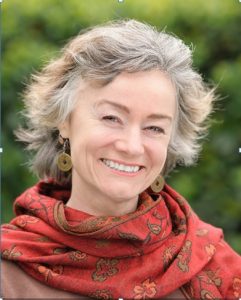
Website/Blog – Facebook – Twitter – Goodreads
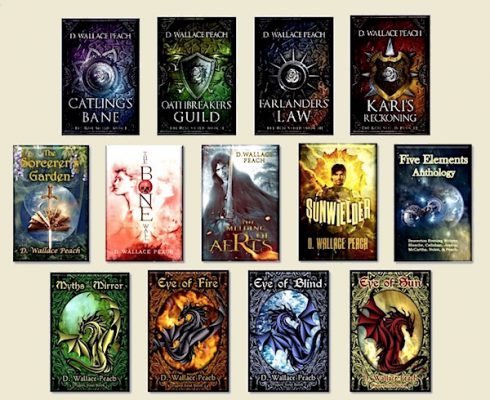
Amazon:
USA – UK – CA – AUS – IN
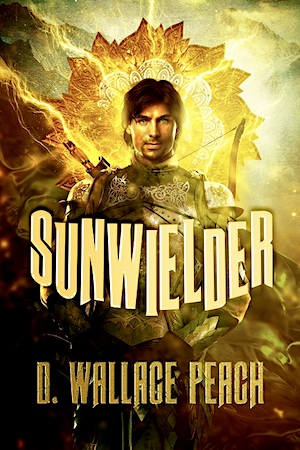
Featured Book: Sunwielder
 Chris The Story Reading Ape's Blog
I imagine you have to keep very good notes if you plan to do a series. Could be hard to keep all the world-building details straight from one book to the next!
LikeLiked by 2 people
Great point, Carrie. Before writing, I have to document the world in a little encyclopedia. Then I maintain an Excel workbook with each spreadsheet catching different details, from new words/languages, to geographical characteristics, historical timelines, and a bunch of mundane stuff like names and descriptions. Believe me, I’m popping back and forth between books too. It’s one of the reasons I find that releasing a series all at once works. I can get all those kinks worked out. 😀 Thanks so much for stopping by to read and comment. Happy Writing!
LikeLiked by 2 people
I enjoyed reading Part 2. Thanks for sharing, Diana and Chris.
LikeLiked by 2 people
Thanks for the visit, Mary. 😀 Happy Writing, my friend.
LikeLiked by 2 people
Diana : Good blog. Your advice on trying to use different measurements for time and distance is spot on. I tried to use different words in my world, and it became a problem. Don’t do it.
I was fascinated that the blog has instant translations across a wide array of languages. How did you manage that, Chris?
LikeLiked by 2 people
I added the Google Translator, Sheron 😎
LikeLike
It’s so tempting, isn’t it, Sheron? I’d love to play with different time-durations, but I can foresee the challenges. If directly related to the plot, there can be some great creative entanglements, but otherwise, it seems to add unnecessary complexity. Thanks for stopping by, my friend. Happy Writing!
LikeLiked by 1 person
Diana, I never thought about the practical logistics of writing science fiction or fantasy. It really is quite the undertaking. I received your children’s book. Thanks for taking the time to send it. Maya is going to love it.
LikeLiked by 2 people
Thanks for stopping by to read, Bernadette. It is an undertaking, and there are some special areas to think about that books in our “understood” world don’t have to deal with. But, the creative aspects are immensely fun – like constructing a giant puzzle! I’m so glad you got Grumpy Ana and in good condition, I hope. Thank you again for the lovely support, and Happy Halloween to Maya!
LikeLiked by 1 person
Reblogged this on Myths of the Mirror and commented:
For those fans and writers of speculative fiction – Part II – another dive into worldbuilding! I had the great pleasure of guest posting on The Story Reading Ape’s blog earlier his month. If you missed the post and are all broken up about it (ha ha) here it is. 😀
LikeLiked by 2 people
Fantastic post Diana. 🙂 xx
LikeLiked by 2 people
Thanks, Debby. You’re so sweet to stop by and read. Have a wonderful weekend and Happy Writing!
LikeLiked by 2 people
Fantastic read Diana. 🙂 x
LikeLiked by 2 people
Very good advice, Diana.
LikeLiked by 2 people
Thanks, Jennie. Of course, this doesn’t apply much to kid’s books where the fantastical is totally acceptable and delightful. It’s one of things that I love about reading children’s books – imagination rules. 😀
LikeLiked by 2 people
I know it doesn’t apply, yet I loved the read. And yes, imagination rules with children’s books. Best to you! 🙂
LikeLiked by 2 people
A great post from a great writer. She know’s what she’s talking about.
LikeLiked by 2 people
Thanks so much for reading, Andrew. I’m all smiles. 😀
LikeLiked by 1 person
Very good advice Diana and strongly made points. Characters do need to be relatable no matter how alien and references understandable in our terms otherwise the story can get lost in a dazzlingly clever background. I read recently Robert Heinlein in his Stranger in a Strange Land called his Mars foundling Smith as a revolt against exotic ‘alien’ names, something which neatly fits in with your arguments.
LikeLiked by 2 people
It’s such a tricky balance, Paul, and there’s a lot of gray area, depending on the story. Characters are the most important, I agree, and then some basic logic so they are consistent with their abilities and the world they live in. I’m working on a story now with a matriarchal system and I have to be so vigilant not to fall back into the subtle givens of the patriarchal structures of Earth. This stuff is all fun, isn’t it? So much to learn not only about the craft but about ourselves! Thanks for stopping by to read. 🙂
LikeLiked by 1 person
A matriarchal background is going to add an strong element to the story Diana.Looking forward to reading your new work
LikeLiked by 2 people
Fantastic advice on world building, Diana. Thank you, Chris, for hosting. xxx
LikeLiked by 2 people
Thanks so much for reading, Adele. As you know, it’s a lot of fun playing in our imaginations. Happy Writing!
LikeLiked by 2 people
Thank you, you too. xxx
LikeLiked by 1 person