

World-building is an important part of any writer’s preparation, and the speculative genres offer some wildly fun opportunities. There are no boundaries. The imagination is unleashed. The setting of the story can be as “fantastic” as the writer desires.
But fantastic also has to be relatable and plausible.
Relatability is a must when it comes to the main character(s). If a reader can’t relate on some emotional level to the protagonist, a book is going to struggle. Why do I mention this with world-building? Because in speculative fiction some or all of the characters may not be human.
There are no limits to alien design from physical features to intelligence to social and cultural norms, and writers can stretch those limits to create some unusual encounters and conflicts. Aliens that completely baffle us are fine, but rarely are they protagonist(s). The main character(s) needs to possess some “human” emotional content that the reader can identify with.
With setting, relatability is a little different. Pushing the limits can create some wonderfully strange and interesting worlds, but for every stretch, the writer needs to ensure that the audience understands what it is they are reading.
Making up or renaming every plant, animal, weapon, and food item on a planet might be realistic, but even with an appendix, it would create an unreadable book. A similar challenge presents itself with altering units of time and distance. The planet Klaspo would likely measure time differently than we do on Earth. And though an author can “explain” the difference, there’s danger in requiring a reader to stop reading and convert Klaspo time-spans into relatable Earth hours/years. We want the reader immersed, not doing math!
It comes down to a question of what’s relevant. The fine line between fantastical and relatable is rather blurry and thoroughly book-dependent. A key to world-building is to elaborate on and integrate those complex imaginary elements that relate directly to the characters and plot, and then sprinkle in all the other details that embellish the unique nature of the place but require little explanation.
Plausibility follows many of the same rules in speculative fiction as it does in other fiction genres: human characters have to act like humans for the most part, and the writer has to have a good reason why a car never runs out of gas, the bullets never miss, and the woman who just survived the zombie apocalypse has perfect makeup and hair. Right?
Plausibility in world-building has everything to do with the integration of its major systems. On Earth, a community/region/nation is made up of a web of forces impacted by its geography, resources, history, political systems, alliances and enemies, cultural norms and values, technological capabilities, economies, and religions. In speculative fiction, the worlds work the same way, and authors may add techno-magic into the mix.
Writers not only build each system with its features, benefits, and flaws, but all systems need to integrate in order to maintain crucial consistency. For example, a technologically advanced society would likely employ technology across a broad array of systems, and if not, there needs to be a reason why.
These major systems push and pull on each other until they reach a level of temporary stability. When a change occurs in one system, it ripples across all the others. Conflicts, power-struggles, and sudden changes are destabilizing, and just like in the real world, the disruptions can lead to broad-reaching chaos. That chaos will serve some, harm others, and leave the world altered as new stability is achieved.
At the start of a writing project that involves world-building, it’s a good idea to write a detailed description of your world, touching on each of the major systems. Creating deep and complex worlds will add to the realism and intensity of your story.
Not every detail of the world you create will end up in print. Much of it will remain subtly in the background, there to support the story. But it will all impact the characters, their choices, and the story’s action. Use it to help hook the reader in the beginning and then leak the backstory in as needed and when the plot kicks into gear.
Happy World-building!
Diana

Website/Blog – Facebook – Twitter – Goodreads
Amazon:
USA – UK – CA – AUS – IN
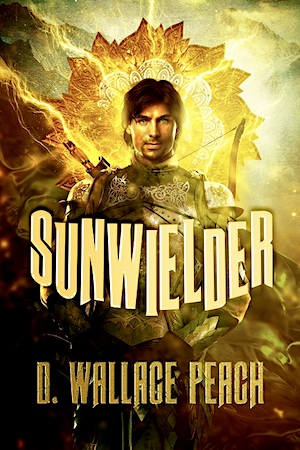
Featured Book: Sunwielder
 Chris The Story Reading Ape's Blog
Reblogged this on firefly465.
LikeLiked by 2 people
Thanks for sharing, Adele ❤
LikeLiked by 1 person
My pleasure, Chris. xxx
LikeLiked by 1 person
Thanks for the reblog! ❤
LikeLiked by 2 people
❤
LikeLiked by 2 people
Thank you, Diana and Chris. A very good post.
LikeLiked by 2 people
Thanks, Robbie. This is different from kid’s books, of course, where the magical needs much less of a foundation. It’s one of the reasons kid’s stories are so delightful. 🙂 Have a wonderful day.
LikeLiked by 1 person
Great guest post, Chris! Wonderful piece on world building, Diana. Thank you!
LikeLiked by 3 people
Thanks for stopping by to read and comment, Vashti. It’s fun touching base with all the speculative fiction writers! I’m looking forward to diving into your book! Have a magical day. 😀
LikeLiked by 1 person
You’re welcome, I enjoyed the piece. Thank you, Diana! 😀 xx
LikeLiked by 2 people
Reblogged this on Author Don Massenzio and commented:
Check out this great guest post by author Diana Peach on the topic of world building.
LikeLiked by 2 people
Thanks so much for the reblog, Don. I appreciate it!
LikeLiked by 2 people
My pleasure.
LikeLiked by 2 people
Thanks for sharing, Don 😀
LikeLiked by 1 person
You’re welcome
LikeLiked by 1 person
Excellent take on world building, Diana. I write speculative fiction set on Earth, but with psychic characters. Building the world in locals I’ve never visited and probably never will can be daunting, but it’s imperative to make the setting believable if readers are to feel like they are right there with my imaginary people. I consider the setting to be a character because it plays such an important role.
LikeLiked by 1 person
Yes, setting can make a very engaging character as the other players interact with it. And so much of this applies to characters too, Lynn, as you know. Characters with special powers have to use those abilities in consistent and rational ways. Writing speculative fiction is tough because it’s so easy to slip back into what we know. Thanks for stopping by to read and Happy Writing!
LikeLiked by 2 people
Great article Diana. Thanks for sharing, Chris. 🙂
LikeLiked by 1 person
Thanks for taking the time to read, Marje. Glad you found this all interesting. Good luck with your book!
LikeLiked by 2 people
Thank you Diana. 🙂
LikeLiked by 2 people
An excellent in-depth article, Diana – I see the beginnings of a new book for you through this series – a factual ‘How to Write’ and all its creative aspects! 😀 You have lots of experience and can offer brilliant advice and hints for us all. Just a thought! 😀❤️ xx
LikeLiked by 2 people
Hi Annika! You are so sweet. I don’t know about brilliant. I still feel like I’m learning all this stuff and wish I could apply it as easily as I can talk about it. Ha ha. Maybe in twenty years I’ll have enough to pull together a guide. For now, I’ll stick with writing. 🙂 Have a lovely day, my friend. ❤
LikeLiked by 2 people
Thanks, Chris, for another opportunity to hang out on your blog! Much appreciated. Have an awesome day. 🙂
LikeLiked by 1 person
You’re welcome any time, Diana ❤️
LikeLiked by 1 person
Fantastic, Diana! Many thanks to you both for sharing. 🙂
LikeLiked by 2 people
Thanks for stopping by to read, Natalie 🙂 Have a lovely week!
LikeLiked by 2 people
An excellent post, Diana. Thank you. Congrats on your books too!
LikeLiked by 3 people
Thank you, Cynthia. Same to you – congrats on the new book! It’s beautiful. 🙂
LikeLiked by 2 people