
As a fantasy/science-fiction writer, I’ve stacked up a bit of experience with world-building that I’ve wanted to share, and The Story-Reading Ape’s blog is the perfect venue.
Now don’t run away if you don’t write speculative fiction. Clearly, world-building is a key part of bringing fantasy and science-fiction stories to life, but it plays a role in all fiction, and in some non-fiction as well.
Setting as Character
Most of us probably agree that the physical places within our stories need to feel authentic. But if we create them as mere backdrops to the action, we’re missing an opportunity to enrich our readers’ experiences. In great fiction, setting plays a role in the story. It’s changeable, a help, a hindrance, a metaphor, a mood, possibly even a character in the drama.
Fantasy author Brandon Sanderson is a proponent of the idea of setting-as-character and builds a “character profile” of the world he’s designing. From his character’s point of view, the world has “personality” including strengths, flaws, and quirks.
Regardless of your genre, the world in which your characters live shapes their experiences. Selecting an effective setting is as vital as choosing the right players and plot. The world might be a friend or foe to your protagonists and villains alike as they navigate a dynamic environment.
The setting of a book may rejuvenate or deplete, trigger buried flaws or instill hope. It may force the characters to learn new skills or gather greater knowledge, or it may confront old fears and force choices that break the heart and soul. It may assist your hero in evading a villain or trap him with no way out. The impact of a world may be physical, emotional, psychological, or spiritual.
In choosing a setting, consider how your plot may play out as you increase the challenges the world imposes. How does the conflict unfold in a sweltering city or on a damaged ship at sea, stranded in a mountain snowstorm or stuck living with controlling parents, in high society or in the trenches of war? What if time/fuel/medication/food/oxygen is running out?
If a scene is falling flat, intensify your setting to up the ante.
But that’s not the only way to bring a setting to life nor the most important.
Setting is Emotional
More important than the “facts” of the physical setting is the character’s emotional connection. A setting truly comes to life when it’s infused with meaning, when we as authors connect the character’s emotions to the details of the physical place and all they evoke.
What about the setting does the character love or loathe? Is the place new to the character’s experience or does it raise memories? Does it elicit excitement, longing, or fear? Combine the character’s feelings with the details as perceived through his or her senses and the setting becomes something that interacts, pulls or pushes on the character’s personality and goals.
If your story is about a couple working through issues, consider the difference if the characters are stuck for the holidays in a cherished family home versus a home that was filled with abuse. What are the key details that symbolize the relationships with the environment? Perhaps it’s a belt hanging on the back of the kitchen door, or a treasured grandmother’s silver tea service.
Sometimes feelings are evoked by the passage of time and how a place changed physically. Or perhaps the place hasn’t changed, but the person who views it is no longer who she or he once was. The contrast is what makes the relationship between character and setting dynamic. Again, link the changes in the physical details or the character’s perception to the emotions they generate.
Setting will also evoke different feelings in different characters. What one finds dull another will find peaceful. What fills one character with a sense of adventure will terrify another. The various reactions to setting create tension, not only with the setting itself but between characters. Take the time to explore each character’s relationship with the world they find themselves in and pit those feelings against each other.
Remember that setting is more than place – it’s the weather and seasons, the sounds and smells, textures and tastes, the values and attitudes, the politics, the people, memories of the past and hopes for the future. Characters will have feelings about all these elements of the world, whether your story takes place down the street or on another planet.
Happy World-building!
Diana

Website/Blog – Facebook – Twitter – Goodreads
Amazon:
USA – UK – CA – AUS – IN
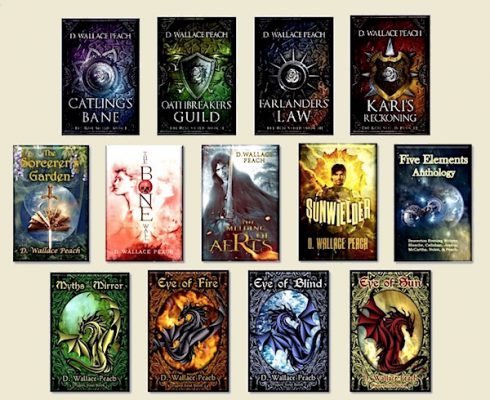
Featured Book: Catling’s Bane

 Chris The Story Reading Ape's Blog
Diana,
Brilliant post.
World building as you rightly said is not confined to fantasy worlds… though aren’t all worlds found in fiction fantasy worlds? Which seems exactly the point you are making.
An author wins when readers are emotionally invested in the characters, I have read and loved books I would never normally read because I have become quickly attached to the characters and the world they inhabit (E F Benson’s Tilling of Mapp & Lucia lives in my imagination quite distinct from the Town of Rye it was based on and I visited).
As you so rightly said, in any novel every single thing is an extension to the characters’ movement through the plot.
Further it is not only the author who world builds but also the reader inside their own head. How easily the reader does this is down to the skillful choices the author makes in the text – evoking atmosphere through description and even subtle cues.
To go off at a tangent, it seems to me this is the true difference between a book and a movie of the book. With a book you become involved because you, as the reader, builds the world the author guided you to build. In the movie each aspect of the world hits you in an instant as that world has been created by someone else… love or loathe it, you are simply a witness. Whereas as a reader, you are the author’s accomplice.
LikeLiked by 4 people
Ah – the reader is “the author’s accomplice.” I love that, Paul, and I hadn’t thought about that point when comparing movies to books. Personally, I think character development is far more important than “setting development,” but we miss wonderful opportunities to enrich the readers experience if we treat the setting like a flat backdrop. And it all has to work together subtly too, doesn’t it? Without the reader’s awareness. Thanks so much for the great comment. Have a wonderful week. 🙂
LikeLiked by 3 people
And thank you for making me think about it in the first place Diana. Wonderful week… you too!
LikeLiked by 2 people
I’ve read books with what I’d consider strong character development … and yet was continually brought out of the flow of suspended disbelief by stock worlds, inauthentic settings, overdescription for the sake of overdescription, etc. Character and world must both be well developed in order for a book to work, at least for me.
LikeLiked by 3 people
This is a really good comment. I have read stuff where people over elaborated a medieval world and it simply ended up as Disney. I think a general rule of thumb with description is probably less is more.
LikeLiked by 2 people
For me, character is the most important, but I agree with all your points, Erik. So much of this is finding that knife’s edge of just enough and not too much. 🙂 I think my next W-B post is on authenticity and plausibility in speculative fiction – were you reading my mind?
LikeLiked by 3 people
Diana, Great minds think alike… Or is it fools seldom differ…. I know which I prefer… but take your choice!!!!!!!
LikeLiked by 2 people
Sometimes one, sometimes the other in my case, Paul. 🙂
LikeLiked by 2 people
Paul, your comment, for some reason, caused me to extend to the idea that even non-fiction requires that rich worlds be built. That world may really have existed, but if the writer isn’t skilled or astute enough to capture it, the work falls short. I’m reading E. B. White’s One Man’s Meat right now, which is non-fiction — and yet the “world” he creates with his words is every bit as big a part of the work as the rest of the content (maybe even the biggest).
LikeLiked by 3 people
yes Erik exactly. What you say is very true. Some book’s I reread because I get lost in the world they create and the story line is almost secondary.
LikeLiked by 3 people
This is a wonderful piece. I have pinned it for future reference.
LikeLiked by 2 people
👍😃
LikeLike
I’m so glad you found it helpful! Have a great week, and Happy Writing. 🙂
LikeLiked by 1 person
Reblogged this on Author Don Massenzio and commented:
Check out this great guest post from Diana Peach on world building settings for all genres as featured on The Story Reading Ape Blog
LikeLiked by 4 people
Thanks for sharing Diana’s post, Don 😃
LikeLiked by 1 person
My pleasure.
LikeLiked by 2 people
Thanks so much for the reblog, Don! So glad you enjoyed the post 🙂
LikeLiked by 2 people
You’re welcome. Great post
LikeLiked by 2 people
Reblogged this on Pen and Paper!
LikeLiked by 3 people
Thanks, Karen 😃
LikeLike
Thanks so much for sharing. 🙂
LikeLiked by 1 person
Reblogged this on K. D. Dowdall and commented:
Chris posted D Wallace Peach’s World Building, Part 1 World Building for All Genres. This is a great post by a very prolific writer who knows how to truly build worlds, whether fantasy, Sci-fi and even for any genre. Her Book “The Sorcerer’s Garden” is a great example.
LikeLiked by 3 people
Thanks again for sharing and for the shout out for Sorcerer’s Garden. I’m grinning ear to ear. 😀
LikeLiked by 1 person
Reblogged this on Die Erste Eslarner Zeitung – Aus und über Eslarn, sowie die bayerisch-tschechische Region!.
LikeLiked by 3 people
Thanks for the reblog. I’m glad you enjoyed the post. Have a lovely week!
LikeLiked by 2 people
Thank you very much for the posting, and have also a great week ahead. ,-) Michael
LikeLiked by 2 people
Brilliant post – I agree with every word. 🙂
LikeLiked by 3 people
Glad you enjoyed it, Judith 👍😃
LikeLiked by 1 person
I’m so glad we’re on the same page, Judith. Thanks for taking the time to read. ❤
LikeLiked by 2 people
With you all the way, Diana.x
LikeLiked by 2 people
Thanks so much for the opportunity to guest post, Chris. It’s bedtime here, but I’ll drop by in the morning as soon as the sun is up. Have a great Sunday.
LikeLiked by 2 people
You too Diana 😀
LikeLiked by 1 person
D. Wallace Peach is a prolific fantasy writer and what a writer she is! World Building Part 1 is inspiring and whether fantasy or not, sets the stage for the characters. World Building is an artistic creation of amazing creative vision and this writer is a master of world building! This is a wonderful learning experience for me because in my first novel I had to develop a fantasy world on an Alien Planet. So very difficult to do. Thank you Chris for sharing this with us. K D 🙂
LikeLiked by 3 people
Thank you, K.D. for the wonderful comment. World-building is a lot of fun, isn’t it? And the sky’s the limit. I’m glad you enjoyed the post. Happy Writing.
LikeLiked by 1 person