
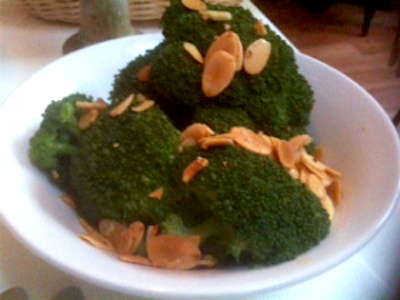
Food can play many different roles in fiction writing. It can set a scene, tell much about a character, even become a player in the story. Since it’s important to engage as many of the reader’s senses as possible, food can be a very useful tool in the author’s toolbox since food description can involve sight, sound, texture, taste and smell – all five of the senses. A real bargain package.
According to The Good Food Guide:
“Children’s literature makes for rich pickings when it comes to culinary descriptions: there’s moment after juicy moment in Dahl’s Charlie and the Chocolate Factory, or James and The Giant Peach.
The description of Amy’s ‘pickled limes’ in Louisa May Alcott’s Little Women – ‘plump and juicy’ in their ‘moist, brown-paper parcel’ with their ‘delicious perfume’ – pops out from the pages.
Other mouth-watering moments can be found in John Masefield’s The Box of Delights, or Swallows and Amazons by Arthur Ransome, and the fabulous tea party in Lewis Caroll’s Alice in Wonderland.
The Good Food Guide rounds off with: “one of the most extraordinary ventures in the entire history of catering: The Restaurant at the End of the Universe, from the book of the same name by Douglas Adams. The restaurant ‘is built on the fragmented remains of an eventually ruined planet which is enclosed in a vast time bubble and projected forward in time to the precise moment of the End of the Universe. In it, guests take their places at table and eat sumptuous meals whilst watching the whole of creation explode around them.’
So, which of those titles have you read? Can you remember some of the scenes where food played a part?
You can probably think of many, many more books, not just in children’s literature, where food features in fiction:
Jane Austen’s Pride and Prejudice, in which Mrs Bennet uses food to impress, being very proud of her table. She cared more to serve fine food than think how to make her guests feel comfortable at the table. Her verdict on the meal tells such a lot about the shallowness and vulgarity of her character:
“The venison was roasted to a turn – and everybody said they never saw so fat a haunch. The soup was fifty times better than what we had at the Lucas’s last week; and even Mr Darcy acknowledged that the partridges were remarkably well done; and I suppose he has two or three French cooks at least.”
Dickens, A Christmas Carol, in which food plays a huge role, and Scrooge is shown a scene from his youth in which his boss, Mr Fezziwig threw a party where “there was cake, and there was negus (a hot drink consisting of wine, sugar, water, lemon juice, and nutmeg), and there was a great piece of cold roast, and there was a great piece of cold boiled, and there were mince-pies, and plenty of beer.” in sharp contrast to the scene he was shown where his own employee, Bob Cratchit, “said he ‘didn’t believe there ever was such a goose cooked.’ Its tenderness and flavour, size and cheapness, were the themes of universal admiration. Eked out by apple-sauce and mashed potatoes, it was a sufficient dinner for the whole family.”
In this example, food is used to make the point, which Scrooge gets, that ‘Better is a dinner of herbs where love is, than a stalled ox and hatred therewith.’ (Proverbs 15:17)
In more recent fiction, what about Chocolat by Joanne Harris, where some of the descriptions of the sweet treats can only be described as mouth-watering, and the heroine uses her delicacies to win the hearts of her customers. Clever lady!
Oh, there is an endless list where food is mentioned in passing or dwelt on enough to make your mouth water.
Here are some of the books remembered by one of the readers of my blog:
Wendy Janes remembers, “the amazing picnics that the Famous Five had in the Enid Blyton books that I read as a child.” She goes on to say, “Bringing things bang up to date, Susan Buchanan’s books Sign of the Times and The Dating Game feature food and drink that forms the backdrop to some great scenes between her characters.”
Susan Buchanan herself comments that Anthony Capella’s The Food of Love has to be her all-time favourite. That one is described as “A delicious tale of Cyrano de Bergerac-style culinary seduction, but with sensual recipes instead of love poems.” Hmmm … interesting … this one gets you on two sensory levels! Good ploy!
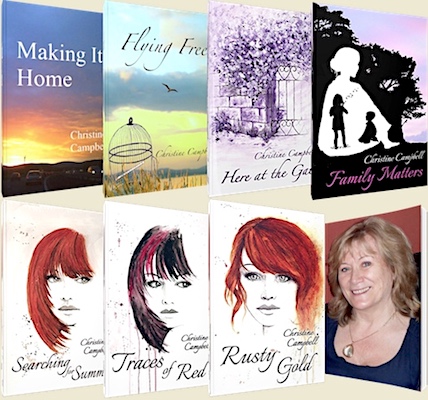
In my novel, Making It Home, two of the main characters meet regularly in a coffee shop. A coffee shop or tearoom is a neutral location. No-one has to act as hostess. No-one has to assume responsibility for the business of getting fed and watered. So it is a useful setting for a writer to use. It allows dialogue to flow as easily as tea or coffee from the pot, or with as many splutters and stutters as a malfunctioning coffee machine. That’s up to the writer and what he or she wishes to accomplish in the scene.
I used the setting to allow space for the characters to get to know one another and the reader to listen in and get to know them too – or not.
“Oh you don’t want to hear about me.” Phyllis held out the delicate china plate of cakes. “Here! Why don’t you try one of these strawberry tarts? They really are delicious.”
As you can see, the topic Food in Fiction, brings quite a variety of books to mind.
The fact that eating and drinking is something we all, without exception, must engage in, gives it an importance in real life that can be reflected in fiction.
Amazon:
 Chris The Story Reading Ape's Blog
The chapter I’m rewriting for my novel right now is a family dinner scene. And I’ve spent so much time on the dialogue and character interaction that I barely mentioned the food! I’ll have to fix that.
LikeLiked by 2 people
Haha! Easily done, Robert. Sometimes the conversation is more important than the food, but mentioning the food, passing a dish, etc can sometimes help readers to visualize the scene.
LikeLiked by 2 people
The conversation and character interaction is definitely the important part, but setting is important too.
LikeLiked by 2 people
If you do not mention the food it will appear as bland, standard food, something not worth mentioning.
LikeLiked by 3 people
Good point, Fran. I wrote the novel in limited third person through the point of view of the main character, so I could describe how the food tastes to him. It’s his mother cooking so he better be appreciative. 🙂
LikeLiked by 3 people
Reblogged this on TINA FRISCO and commented:
Christine Campbell brings us Part 2 of Food in Fiction as a guest on The Story Reading Ape blog. Food as an element in novels has tantalized readers across the ages, as it engages all of the senses. Hop over to Chris’ blog and read this fascinating article…
LikeLiked by 2 people
Thanks for the share Tina 👍😃😘
LikeLiked by 1 person
A pleasure, Chris ❤
LikeLiked by 1 person
❤️
LikeLiked by 1 person
Thanks, Tina. I appreciate the share 😊
LikeLiked by 2 people
You’re welcome, Christine ❤
LikeLiked by 1 person
Food, food, glorious food. We can’t live without out, how can our fiction friends? A wonderful post. What delicious aromas surround me. 😀
LikeLiked by 2 people
So glad you enjoyed the post. Thank you 😀
LikeLiked by 1 person
Great article. Thanks so much for including my reference to Anthony Capella’s book. Funnily enough I recommended it to someone just yesterday! I too include a lot of food description in my books…can’t help it!
LikeLiked by 2 people
Thank you. My pleasure to include your reference, Susan. It’s a good recommendation.
I find my characters particularly enjoy a cup of tea!
LikeLiked by 1 person
Yummy post, Christine. And what a lovely surprise to see you’ve included my memories of food in books. 🙂 Here’s another I’d like to add from a book I’ve read very recently – there’s an excellent scene that involves tasting honey in Still Time by Jean Hegland.
LikeLiked by 2 people
Thank you, Wendy. I enjoyed your memories, so it was a pleasure to include them. I’ll need to check that one out 😀
LikeLiked by 1 person
I love this post! Food should definitely be part of the characters and even the plot. Since my editor doesn’t like my food distractions, I must make them better, and more essential to the story.
LikeLiked by 2 people
I’m so pleased you enjoyed the post, Jemima.
Good plan 😊 Unless your editor is just not a ‘foodie’ 😏
LikeLiked by 1 person
I love to include references to the local food in my children’s travel adventure books. From apple strudel in Vienna to cafe con leche in Spain and fish and chips in England, Amanda gets to sample the local cuisine. As a child, I enjoyed reading about food in books. Remember Anne’s pudding disaster in Anne of Green Gables?
LikeLiked by 2 people
That sounds delightful, Darlene, and must make your books delicious 😀
Yes, I had forgotten about that. I loved Anne of Green Gables. Thank you for the reminder.
LikeLiked by 2 people
What about food used as a weapon? Being withheld as a power play, being used as poison (food allergies), or as the transport for poison. In the age old fairy tale of Hansel and Gretel the food was used as a tool to keep track of their own traces, as a lure by the witch, and to fatten the boy …
The poisonous apple makes snow-white’s demise.- as an apple is the demise of Eve and Adam.
Yes, food is important and makes stories.
LikeLiked by 2 people
Some great ideas here, thank you. I shall keep them in mind.
LikeLiked by 2 people
Reblogged this on Smorgasbord – Variety is the spice of life and commented:
Christine Campbell with part two of Food in Fiction as a guest with The Story Reading Ape.. the food that your character eats can say a great deal about them… and adds colour to your writing… head over and indulge yourself.
LikeLiked by 3 people
Thanks for re-blogging Sally – Hugs XXX 😀
LikeLike
Yes, thank you, Sally. 💕
LikeLiked by 2 people
Oh yes, our characters have to eat. If food isn’t mentioned somewhere in our pages we’re missing a trick. Whether it’s sweet papers littering the floor of a car, the making of a cup of tea (or coffee), preparing and eating a homemade meal or dining at a restaurant it all adds to the picture we conjure up. I have one character who can ‘get by’ in making basic dishes but excels at pancakes.
LikeLiked by 2 people
Love that use of food in your fiction, Lindsey. Great idea to give a character a speciality like that. And who doesn’t love pancakes? Yum!
LikeLiked by 1 person