
For a few years now, Chris has been posting articles to help us with our craft. I’ve learn some valuable things on this site, from editing to copywriting to marketing books and everything in between. I might have missed it, but there is one bit of advice that I have not seen here. And that is, if you want to write well, you must read.
Reading to a writer is as medical school is to a doctor, as training is to an athlete, as breathing is to life. Think of reading books as taking a writing course.
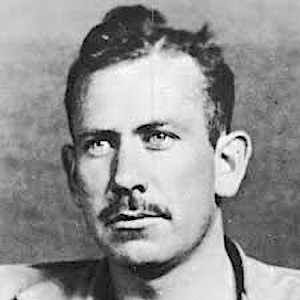
I would suggest reading the classics: Hemingway, Fitzgerald, and, of course, Steinbeck, to name but a few. These three authors made up their own rules. (Hemingway couldn’t get published at first because his writing was so different from the writing that preceded him.)
Below are three examples of Steinbeck’s writing. If you read stuff like this, you can’t help but become a better writer. Please note that the first example is one long sentence that makes up an entire paragraph. That, of course, is a big no-no . . . or so “they” say.
• • • • •
“The concrete highway was edged with a mat of tangled, broken, dry grass, and the grass heads were heavy with oat beards to catch on a dog’s coat, and foxtails to tangle in a horse’s fetlocks, and clover burrs to fasten in sheep’s wool; sleeping life waiting to be spread and dispersed, every seed armed with an appliance of dispersal, twisting darts and parachutes for the wind, little spears and balls of tiny thorns, and all waiting for animals and the wind, for a man’s trouser cuff or the hem of a woman’s skirt, all passive but armed with appliances of activity, still, but each possessed the anlage of movement.”—John Steinbeck, The Grapes of Wrath
• • • • •
“The afternoon came down as imperceptibly as age comes to a happy man. A little gold entered into the sunlight. The bay became bluer and dimpled with shore-wind ripples. Those lonely fishermen who believe that the fish bite at high tide left their rocks and their places were taken by others, who were convinced that the fish bite at low tide.”—John Steinbeck, Tortilla Flat
• • • • •
“June is gay—cool and warm, wet and shouting with growth and reproduction of the sweet and the noxious, the builder and the spoiler. The girls in the body-form slacks wander High Street with locked hands while small transistor radios sit on their shoulders and whine love songs in their ears. The young boys, bleeding with sap, sit on the stools of Tanger’s Drugstore ingesting future pimples through straws. They watch the girls with level goat-eyes and make disparaging remarks to one another while their insides whimper with longing.”—John Steinbeck, The Winter of our Discontent
My first bit of advice is to read.
My second: don’t pay so much attention to the “rules” of writing.
Thank you for listening to my morning rant,
Andrew Joyce
Website – Blog – Twitter – Facebook

 Chris The Story Reading Ape's Blog
I believe the first paragraph of Treasure Island is one long sentence as well. It’s not breaking the rules, so much as using the rules correctly, or manipulating them well.
LikeLiked by 2 people
Steinbeck is one of my all-time favorite authors. Great examples and great tips!
LikeLiked by 2 people
I kinda like ol’ Johnny boy myself.
LikeLiked by 2 people
I love this! The examples you gave remind me of when I started writing many years ago. My enthusiasm was ripe and words flowed. Not so much anymore. The requirement to becoming an “acceptable” writer has washed away my joy of descriptive prose. Instead, I stumble, trying to find the quickest route to the end of a sentence. It’s agony!
LikeLiked by 2 people
I’m sorry to hear that. Perhaps you should start writing again and write what is in your heart and in your mind.
LikeLiked by 3 people
I agree with Andrew 😀
LikeLiked by 1 person
I am trying – just struggling to hear that inner voice! Reading definitely helps. Thank you 😀
LikeLiked by 2 people
I hate to say it, but I’ve never read Steinbeck. Those quotes are truly beautiful. I am now adding him to my reading list.
LikeLiked by 3 people
You can’t do better than Steinbeck.
LikeLiked by 2 people
Oh gosh, Viv- me either! Other than the Cliff notes! This quote made me want to go to the library and get him now! Of course, since it’s midnight, I might get arrested….
LikeLiked by 1 person
LOLOLOL
LikeLiked by 1 person
Great advice! “Rules” can be useful as guidelines when you can see something isn’t working, but sticking to them rigidly can result in a formulaic story that has no life in it.
LikeLiked by 3 people
I’ve been a mess all my life. I never could color within the lines. Maybe that explains my distain for rules. But I do have to agree with you . . . they are useful guidelines.
LikeLiked by 2 people
Absolutely.
LikeLiked by 2 people
Great quotes, Andrew. I love to read, and it seems as though it’s time for a little indulging in Steinbeck.
LikeLiked by 3 people
Jack London ain’t no slouch neither. The Jacket (Star Rover) is mind blowing.
A friend of mine that takes perpetual writing classes tells me that Steinbeck couldn’t get published today because the “rules” have been changed. What is sad is the fact that they’re teaching such drivel to people who want to write. That is why I advise not paying so much attention to the current rules of writing. Like me employing the double negative at the beginning of this missive. Wait . . . that’s not a good example.
LikeLiked by 2 people
I think rules are meant to be learned and broken, Andrew. And that ain’t no lie; I’m stickin’ to it.
LikeLiked by 4 people
Agree….and agree–The Jacket was “mind-blowing”!!
LikeLiked by 2 people
Check into “The Winter of Our Discontent”…I found it a fascinating glimpse into the human character and condition; its concept reminds me of The Metamorphosis. And it flies, in terms of an easy read. My next Steinbeck will be “To A God Unknown.” (And I thank Andrew for re-introducing him to me, as you do – or will!)
LikeLiked by 4 people
I will. I’m excited now for a great read and little lesson in writing on the side 🙂
LikeLiked by 1 person
Reblogged this on andrewjoyce.
LikeLiked by 2 people
Reading provides tools to the writer. Learn to read with your writer cap on. Notice how sentences flow, their rhythm, why the author has chosen one noun instead of another. What trigger a vision in your mind, what doesn’t.
You write on top of giants. Otherwise, from ground up, what really can you offer but your own hubris?
LikeLiked by 3 people
I often wonder what, or who, the first writers read Massimo (Chicken / Egg scenario) 😀
LikeLiked by 2 people
“You write on top of giants.” I like that!
LikeLiked by 3 people
Unfortunately, some authors claim they are so busy that they don’t have time to read. What a tragedy…
LikeLiked by 2 people
I MAKE time to read Margaret – it also serves to relax me after a hard days research and blogging 😀
LikeLike
They might find the time to read if they threw their TV out the window. Just sayin’.
LikeLiked by 2 people
Better still – their SMART PHONES Andrew 😀 😀 😀
LikeLiked by 2 people
Oooooo, now- don’t start stepping on toes there, Chris! 😉 I finally turned off my TV for good, back in May. Such a good decision! But, my phone? We’ll have a fight there, mister!
LikeLiked by 1 person
😀 😀 😀
LikeLiked by 1 person
While I’ve read a few of Steinbeck’s books, it may be time to read a few more. Thanks for the reminder. Hemingway, Twain a Steinbeck… now that is a trinity I can wrap my head around! For poetry, I’ll take my Dorothy Parker straight and then dive into the French poets.
LikeLiked by 2 people
Dorothy Parker had a biting wit. Never read any of her poetry, but love her prose.
LikeLiked by 2 people
“The first thing I do each morning is brush my teeth and sharpen my tongue.” Dorothy Parker
LikeLiked by 3 people