
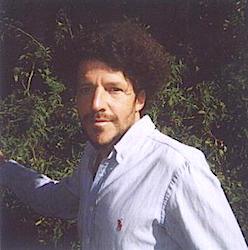
Hello folks, Mark Anthony Tierno here again, author of Maldene. and proud member of the World Famous TSRA Authors Hall of Fame
This time, though, I’ve decided to share a few of my writing tips, and since everyone has their own Top 10 list, I’ve come up with mine… only it seems to have come out to eleven, but with a very good reason. At any rate, be it novel or short story, I’ve found over the years that these tips I’ve developed can help a lot. So on with the list.
.
1) Turn off the Grammar Checker. Leave on the spell checker, by all means, but for dialogue especially, the grammar checker is useless. No real-life character talks like they just came out of Yale. And if you’re doing accents then your spell checker WILL be bugging you. Ignore it.
2) Use a database for keeping track of character details. Keeps them consistent, all the little details right there in front of you. You may not need all the details all the time, but it will keep the picture in your head, and remind you who looks and acts like what, or which character was last in possession of that Magic Whatsit.
3) Don’t be afraid to innovate. Remember, the earliest big writers didn’t go to Writing School because such schools didn’t exist. The basic grammar you learned in Elementary School is all you need to know for good writing. “Writing Classes” are merely someone else’s opinion of what might work (and keep in mind, these instructors are teaching… usually not really earning a living with their own books).
4) Imagination and creativity is a born gift. Except for during the period we call childhood, you can’t learn how to be creative in a class.
5) Outline. Outlining, and other prep work, before starting in with the book, will prevent such things as writer’s block and minimize stumbling blocks with plot. Need proof? I’ve never had writer’s block; I get it all out of the way up front.
6) Music Helps. No one can write or concentrate in total silence. Break out whatever music works for you and the genre you’re writing and have it playing in the background. For myself, a little John Williams goes a long way.
7) For dialogue, if in doubt, say it out loud. Does it sound like something a real person would say and the way he’d say it? There’s a lot of dialogue out there that sounds like it came straight out of an HS English textbook instead of a real person’s mouth. They jus’ don’ talk like that.
8) Be adaptable. Outline or no, ideas will come up in the middle of a scene, ideas that might make it better, add characters, etc. Still stay within your chosen basic outline, but don’t be afraid to tweak some of the details in mid stream. I’ve had characters create themselves that way that ended up inspiring entire subplots for later novels.
9) Break the rules. Acceptable word counts, three-act format, story must have just the single protagonist who’s story must follow the same set pattern, whatever the “official” rule is. Break ’em if you need to. The story is the only thing that counts. Remember: the only one looking over your shoulder is you, so be unafraid.
10) Plot or Character. Everything in a story must have something to do with either the plot or character development (both at the same time is the most economical).
And finally my favorite…
11) One picture may be worth a thousand words, but the job of a good writer is to make one word worth a thousand pictures. (I came up with this one myself, so if you use this quote please credit me).
Well, that’s all for now. I may return if the ape watching the door lets me past again (maybe I’ll bribe him with a banana engraved with a quote from Shakespeare). In the meantime you can still catch me at www.maldene.com
 Chris The Story Reading Ape's Blog
Very Helpful. Good.
LikeLiked by 1 person
I agree with all your tips, accept one. I have to work in complete silence.
LikeLiked by 1 person
I partially agree with Kathy. Sometimes music in the background helps and sometimes it breaks your focus. Yes, it does help (greatly) to have music of the genre you’re writing for playing in the background.
LikeLiked by 1 person
I did say when I have the music, it has to be something without lyrics, else hearing someone singing does get distracting. Instrumental and classical movie-soundtrack type stuff work great for me. After a short bit I’m too lost in my own world of writing to really notice the music… except when it stops, then it’s like waking up a sleep walker.
LikeLiked by 1 person
Reblogged this on theowlladyblog.
LikeLiked by 1 person
Thank you, Mark. Break out the banana! I’d love to hear more!
LikeLiked by 1 person
Let’s see… I got a green banana, a macho banana (yuck! tried one once), a banana split that says his name is Fleegle,… this may take a bit.
LikeLiked by 1 person
Thank you, Chris, for sharing another interesting author and post. Hugs!
LikeLiked by 1 person
Thank you for the great tips. I like your daring attitude about breaking the rules! Sometimes they need to be broken or at least shaken up! Best wishes for success with your book! 7
LikeLiked by 1 person
I like the idea of breaking the rules from time to time!
LikeLiked by 1 person
That’s one of the reasons rules are made 😀
LikeLike
Great Tips there Mark!
LikeLiked by 1 person