
More Medieval information from Allison 🐵
Don’t forget to check out the other 33 Medieval posts on her blogI haven’t reblogged all of them 😃


Some of my recent posts have talked about the harvesting, threshing, and winnowing of grain, and how vital grains were as a food source in medieval times. But before grains could be used for baked goods and alcohol production, they had to be processed. For the most part, this happened at the local mill. There were two different types commonly used, depending on the climate and landscape; water, or wind.
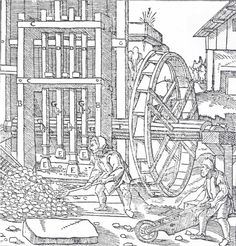 It took a sizeable amount of money to build and maintain a mill. The entire building was basically a large machine, where water or wind powered a number of large gears that moved the grinding stones inside. Mill stones couldn’t be just any old stones. They had to have specific qualities, which often required that they be purchased and carted from quarries long distances away. Because the stones were so large, they might also have to be broken into pieces…
View original post 460 more words
 Chris The Story Reading Ape's Blog
What intrigues me about the medieval period is the way people thought so differently back then. I still recall piling out of a university lecture on medieval England, years ago, and heading down to watch “Monty Python and the Holy Grail” for about the 128th time… and suddenly going ‘hey, wait a minute’ when I realised the extent to which they’d nailed the reality of that thinking and life – and then skewered it. Of course Terry Jones is a medieval scholar…
LikeLiked by 1 person
That’s one of the things that interests me Matthew – our ancestors, in all ages, thought differently from us today and from those before them as well…
LikeLike