
As a fantasy/science-fiction writer, I’ve stacked up a bit of experience with world-building that I’ve wanted to share, and The Story-Reading Ape’s blog is the perfect venue.
Now don’t run away if you don’t write speculative fiction. Clearly, world-building is a key part of bringing fantasy and science-fiction stories to life, but it plays a role in all fiction, and in some non-fiction as well.
Setting as Character
Most of us probably agree that the physical places within our stories need to feel authentic. But if we create them as mere backdrops to the action, we’re missing an opportunity to enrich our readers’ experiences. In great fiction, setting plays a role in the story. It’s changeable, a help, a hindrance, a metaphor, a mood, possibly even a character in the drama.
Fantasy author Brandon Sanderson is a proponent of the idea of setting-as-character and builds a “character profile” of the world he’s designing. From his character’s point of view, the world has “personality” including strengths, flaws, and quirks.
Regardless of your genre, the world in which your characters live shapes their experiences. Selecting an effective setting is as vital as choosing the right players and plot. The world might be a friend or foe to your protagonists and villains alike as they navigate a dynamic environment.
The setting of a book may rejuvenate or deplete, trigger buried flaws or instill hope. It may force the characters to learn new skills or gather greater knowledge, or it may confront old fears and force choices that break the heart and soul. It may assist your hero in evading a villain or trap him with no way out. The impact of a world may be physical, emotional, psychological, or spiritual.
In choosing a setting, consider how your plot may play out as you increase the challenges the world imposes. How does the conflict unfold in a sweltering city or on a damaged ship at sea, stranded in a mountain snowstorm or stuck living with controlling parents, in high society or in the trenches of war? What if time/fuel/medication/food/oxygen is running out?
If a scene is falling flat, intensify your setting to up the ante.
But that’s not the only way to bring a setting to life nor the most important.
Setting is Emotional
More important than the “facts” of the physical setting is the character’s emotional connection. A setting truly comes to life when it’s infused with meaning, when we as authors connect the character’s emotions to the details of the physical place and all they evoke.
What about the setting does the character love or loathe? Is the place new to the character’s experience or does it raise memories? Does it elicit excitement, longing, or fear? Combine the character’s feelings with the details as perceived through his or her senses and the setting becomes something that interacts, pulls or pushes on the character’s personality and goals.
If your story is about a couple working through issues, consider the difference if the characters are stuck for the holidays in a cherished family home versus a home that was filled with abuse. What are the key details that symbolize the relationships with the environment? Perhaps it’s a belt hanging on the back of the kitchen door, or a treasured grandmother’s silver tea service.
Sometimes feelings are evoked by the passage of time and how a place changed physically. Or perhaps the place hasn’t changed, but the person who views it is no longer who she or he once was. The contrast is what makes the relationship between character and setting dynamic. Again, link the changes in the physical details or the character’s perception to the emotions they generate.
Setting will also evoke different feelings in different characters. What one finds dull another will find peaceful. What fills one character with a sense of adventure will terrify another. The various reactions to setting create tension, not only with the setting itself but between characters. Take the time to explore each character’s relationship with the world they find themselves in and pit those feelings against each other.
Remember that setting is more than place – it’s the weather and seasons, the sounds and smells, textures and tastes, the values and attitudes, the politics, the people, memories of the past and hopes for the future. Characters will have feelings about all these elements of the world, whether your story takes place down the street or on another planet.
Happy World-building!
Diana
Website/Blog – Facebook – Twitter – Goodreads
Amazon:
USA – UK – CA – AUS – IN
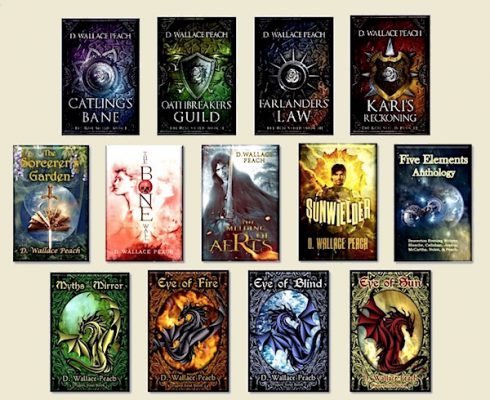
Featured Book: Catling’s Bane

 Chris The Story Reading Ape's Blog
Thanks for the comment. I’m glad the post was of interest. People are wonderfully creative and I love the worlds they imagine. Enjoy the book and have a wonderful week. 😀
LikeLiked by 1 person
The first book of yours I read, Diana, was The Sorcerer’s Garden, and the world you created was integral to the plot and the characters. I told many people about it, because you’d done something new in a genre that can become all too samey.
With your most recent set, The Rose Shield, you yet again created a memorable world that holds up to everything you speak about in this post. From the tiered cities and the social implications they carry, to “mundane” farmlands being the novelty, to the moons (which not only effectively show passage of time, but alter mood), to the self-restoring walls and the loophole you create … for all the wonderful characters and plot, I can’t imagine having been as enthralled without the clear and compelling world-building you accomplished.
LikeLiked by 2 people
Yeesh. Thanks for the wonderful comment and my big grin, Erik. I like writing about settings and actually have to be careful not to over describe. I’m glad you enjoy the books and the balance I achieved. I’ll be glowing all day. Have a lovely week!
LikeLiked by 2 people
Again, Diana inspires me. In the new book I’m writing, the setting is minor, minor character. Thanks to this post, I’m going to move it up a notch!!
LikeLiked by 2 people
Oh good, Pam. In Twin Desires you used the storm at the end to move the plot forward as well as increase tension. I think we do some of this naturally as writers, but it’s nice to go back and tweak intentionally, too. Often, that’s all that’s needed. Have a great Sunday, my friend. ❤
LikeLiked by 1 person
Great post, Diana! It’s so true, the amount that setting can affect the story. Poe used setting so very well in his work. It’s not just a place to put the story, it colors the story both by the location and by how the characters react to it. Now to keep that in mind as I write! 😀
LikeLiked by 3 people
Poe is a great example, Julie. I can’t think of a fiction genre where these techniques wouldn’t apply. Personally, I don’t worry too much about making the setting work hard until a later draft. I have enough trouble getting the story out in the first place. 🙂 Happy Writing!
LikeLiked by 3 people
One never stops learning ! Thanks Diana for your insightful information. 🙂
LikeLiked by 3 people
Thanks for the visit, Lynne. I keep learning – that’s for sure. And I love that AHA feeling. I’m glad you enjoyed the post. 🙂
LikeLiked by 2 people
An excellent article, Diana and the value and importance of setting cannot be underestimated. I found myself nodding in agreement with all your points and through my writing I’ve found that the setting not only sets the mood it also strengthens the character’s personality- how true that his/her engagement with the surroundings is as critical as many other components. At times I’ve worried that my setting has impinged too much on a story but you’ve put my fears to bed!
LikeLiked by 3 people
Great points, Annika. Yes, setting can help define and strengthen character. I’m glad you have a strong setting and feel better about its role in your book. We only need to look around at what’s happening in the real world to see how environment intensifies personal stories. Happy Writing. 😀
LikeLiked by 2 people
One of the primary things that draws me to a fiction work is the uniqueness of the setting. The richer, the better!
LikeLiked by 3 people
I’m reading a book now that has a very Earth-like setting combined with fantasy elements, and I like that too. It seems that just about anything works if the writing is well done and a sense of plausibility is maintained. It the setting is authentic and natural to the characters it has a good chance of being that way to the reader. Just the right amount of rich detail seems key. 😀
LikeLiked by 2 people
This is brilliant, Diana. Settings aren’t backgrounds, they’re characters. The setting can affect a character as much as other characters do. Thanks for hosting, Chris.
LikeLiked by 3 people
Thanks, Sarah. If you think about it, in some stories the setting is actually the villain! Call of the Wild or The Perfect Storm. It’s just another layer to think about when reworking and revising a story. Happy Writing, my friend.
LikeLiked by 3 people
Excellent post, Diana. Thanks for sharing, Chris.
LikeLiked by 3 people
Thanks, Mary. I’m glad you enjoyed it. Happy Writing!
LikeLiked by 2 people
Reblogged this on Musings on Life & Experience and commented:
More great information on settings from Diana.
LikeLiked by 3 people
Thanks for sharing, Suzanne ❤️
LikeLiked by 1 person
Thanks so much for sharing, Suzanne. Have a lovely Sunday, my friend. ❤
LikeLiked by 1 person
Advice from a true master of the craft. Thank you Diana. Hugs on the wing!
LikeLiked by 3 people
Thanks Teagan. From what I’ve read of yours, your world-building is exceptional. Sending hugs back at you! ❤
LikeLiked by 3 people