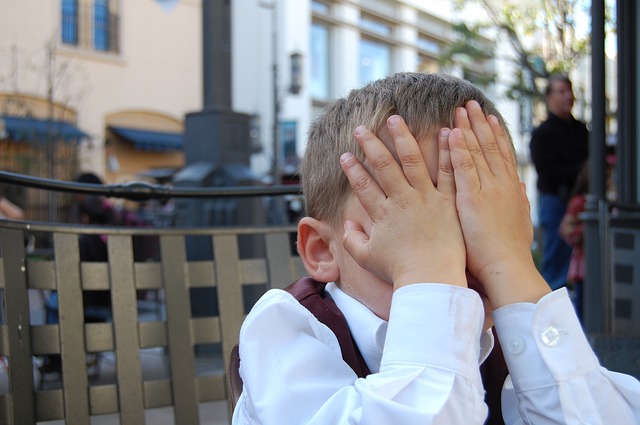
 One of the really bad things you can do to your writing is to dress up the vocabulary, working for long words because you’re maybe a little bit ashamed of your short ones. This is like dressing up a household pet in evening clothes. The pet is embarrassed, and the person who committed this act of premeditated cuteness should be even more embarrassed.

 Chris The Story Reading Ape's Blog
I’m a huge fan of Stephen King. However, writing comes in all forms because it’s an art form like drawing, painting, and music. We get some music and art that are more complex, some that are more simplistic. Each show beauty in their own way. There are writers who chose to use more simple words, shorter in nature or more well known, while there are other writers who love to use long words or words you have to open up a dictionary to know. I think both writers are needed. That said, what’s the point of having a huge vocabulary in the English language if we never use all these words? Fair enough, I think huge, or gargantuan words, can be misused to the point that the sentence looks silly. But I do think, if used properly, that long and obscure words can increase our understanding of language, add flair and a poetic nature, and increase our intellectual capacity. Here are two quotes from two great writers, taken from the page “The 30 Harshest Author-on-Author Insults in History” from Flavorwire.
William Faulkner speaking about Hemingway: “He has never been known to use a word that might send a reader to the dictionary.”
Ernest Hemingway speaking about Faulkner: “Poor Faulkner. Does he really think big emotions come from big words?”
Both of these writers were literary greats, and they still loom tall after death. They both had different writing styles, but they both wrote wonderful works of literature. This just reiterates the point that there isn’t one size fits all kind of writing. If someone can write using long and complex words in a way that is more poetic and moving, and not silly, have at it. If someone can choose simple everyday words without coming across as dull and uninspired, but instead large in the realm of emotion, then great. That’s the beauty of writing and self-expression.
LikeLiked by 1 person
InDEED, Jonathan, but I suspect it depends on the age of the reader, e.g., many readers of my age, raised with Dickens, Burroughs, etc., tend to favour longer words and descriptions, but young folk nowadays seem to favour shorter words and descriptions. 😎
LikeLike
Truer words were never spoken.
LikeLiked by 1 person
👍😃
LikeLiked by 1 person
no problem for me because I do not know any big words or small ones
LikeLiked by 1 person
LOLOL
LikeLiked by 1 person
And here, I can’t find my ending 😂
LikeLiked by 1 person
LOL
LikeLiked by 1 person
I just learned this same thing in a writing for the web class!
LikeLiked by 1 person
👍😃
LikeLiked by 1 person
Never use a long word if a short one will do the job just as well. Never use a short word just to keep things simple, when a longer word more perfectly describes what you want to say. Those are my rules.
LikeLiked by 2 people
Good rules 👍😃
LikeLike
Just finished a book that had more 6 and 7 syllable words and it just seemed to be trying too hard.
LikeLiked by 1 person
Relating to my comment above, did the words used give a clearer picture than simple ones would have done? If not, then the ‘trying too hard’ criticism is valid.
LikeLiked by 2 people
😄
LikeLike
They added nothing but confusion. The character and the words didn’t fit.
LikeLiked by 2 people
I’m impressed that you finished it, Patty 😃
LikeLiked by 1 person
So am I. I think.
LikeLiked by 1 person
😄
LikeLiked by 1 person